Rugby League World Cup 2026: Dates, the Men's Field and How to Watch
The IRL Rugby League World Cup 2026 starts on 15 October with Australia against New Zealand in Sydney and ends with the finals on 15 November. The IRL says the three tournaments cover 53 matches in nine cities, with every match streamed on Premier Sports Player in 129 more countries.

Australia and New Zealand open the IRL Rugby League World Cup 2026 at Allianz Stadium in Sydney on Thursday 15 October, and the finals follow on Sunday 15 November. The IRL says the edition covers 53 matches in nine cities across Australia, New Zealand and Papua New Guinea, and that every match from all three tournaments will be streamed live on the Premier Sports Player platform in 129 more countries.
The opener at Allianz Stadium
The fixture list puts Australia against New Zealand at 20:05 local time on 15 October. Australia arrive as the 2025 Ashes Series winners and the defending World Cup champions. New Zealand arrive as Pacific Cup champions.
This is the 17th edition of the competition, which the IRL describes as the second oldest sporting World Cup. It began in France in 1954, when Great Britain beat France in Paris, and the men's trophy has carried the name of the French administrator Paul Barriere since 2017.
Three tournaments, 53 matches, nine cities
Three tournaments make up the event: men's, women's and wheelchair. Ten teams contest the men's competition, while the women's and wheelchair competitions have eight teams each, according to the IRL's competition page.
The IRL says the tournament as a whole is staged in nine cities in Australia, New Zealand and Papua New Guinea. The fixtures released for the opening rounds use grounds in Sydney, Perth, Newcastle and Port Moresby.
Who plays in the opening four days
Ten teams appear across the five matches of the men's first round, which is spread over four days. Samoa face France at CommBank Stadium in Sydney on Friday 16 October. Papua New Guinea meet Lebanon in Port Moresby and England play Tonga at HBF Park in Perth on Saturday 17 October. Fiji face Cook Islands at McDonald Jones Stadium in Newcastle on Sunday 18 October.
The men's field is Australia, New Zealand, Samoa, France, Papua New Guinea, Lebanon, England, Tonga, Fiji and Cook Islands.
The women's tournament opens on the same weekend. Australia play Samoa on 16 October in Sydney, Papua New Guinea face France in Port Moresby and England meet Wales in Perth on 17 October, and New Zealand play Fiji in Newcastle on 18 October.
Round two begins on Friday 23 October with Tonga against Lebanon in Sydney, and continues on 24 October when Papua New Guinea host Samoa in Port Moresby.
Where the ranking gaps are
The IRL's published men's rankings list the teams with a percentage beside each nation: Australia 100%, New Zealand 82%, England 70%, Samoa 56%, Tonga 54%, Papua New Guinea 47%, Fiji 34% and Cook Islands 24%.
Eight of the ten men's teams sit in that top eight. France, ranked 11th, and Lebanon, ranked 23rd, are the two that do not.
The order follows results across a four-year window. The IRL says the rankings are calculated on each nation's performance over the current season and the three preceding seasons, with points awarded for the result, the margin of victory or defeat, the strength of the opposition, how recent the match was and how important the competition was. World Cup matches rank highest in that last category.
The eligibility calls that changed two squads
On 3 October the IRL approved an application by Dane Gagai to change his Tier 1 eligibility from Australia to New Zealand. Gagai qualifies through his mother and has played for the Maori All Stars since 2019, but the rules stop a player who has represented one Tier 1 nation, in this case Australia, England or New Zealand, from playing for another. His application was rejected on those grounds at first.
An IRL Appeals Committee then accepted that Gagai, who has played 23 State of Origin matches for Queensland, had not been given the same option as other players after recent changes to State of Origin eligibility rules. Those changes allowed Briton Nikora, Casey McLean and Addin Fonua-Blake to play in this year's series. Gagai has not played for Australia since 2018 and was not in the preliminary 40-man squad for the tournament.
IRL chair Troy Grant said there were "special circumstances" in the case and that the Kangaroos coach Kevin Walters and ARLC executive chairman Peter V'landys supported the application. Selection is a separate matter: Grant said it is up to New Zealand whether they pick him.
The same appeals committee approved an application for Kaiyah Atai to play for New Zealand after she represented Cook Islands in a World Cup qualifying match in 2024. Atai was born in New Zealand but was ruled ineligible at first because the qualifiers count as part of the 2026 World Cup. Cook Islands did not qualify for the tournament.
How to watch outside the host countries
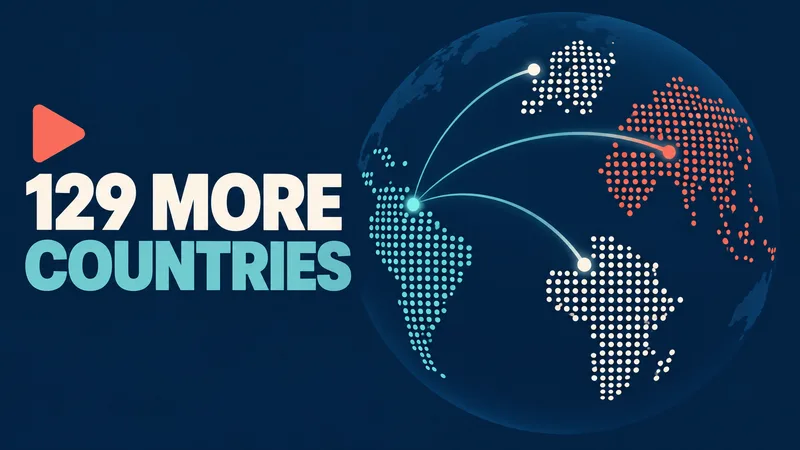
The global streaming plan was confirmed on 8 October. Every match from the men's, women's and wheelchair tournaments will be streamed live on Premier Sports Player in 129 more countries, a list the IRL breaks down as 45 in Africa, 12 in Asia, 38 in Europe and 34 in the Americas. A Rugby League World Cup tournament pass in those countries is priced at US$25, and the IRL says the apps will launch before the tournament with the release date depending on the territory.
Some markets are covered differently. Premier Sports holds live and exclusive rights in the United Kingdom, the Republic of Ireland and Canada, and has covered the tournament in the UK and Ireland twice before, in 2013 and 2017. Its UK coverage will be hosted by Meg Wellens, with a panel that includes the former England players Leon Pryce, Kevin Brown and Emily Rudge.
Premier Sports Asia holds rights in 22 territories across the region, where subscriptions start from US$25 per month. The IRL said on 3 October that it was close to finalising further global deals and that more announcements were planned. IMG, the IRL's exclusive global media rights partner for the tournament, negotiated those deals.
What is left to confirm
No broadcaster for Australia, New Zealand or Papua New Guinea appears in the IRL's coverage releases, so viewers in the host countries have no confirmed television or streaming home in those pages.
Squad lists come from the competing nations rather than the IRL, and the fixture pages set out the opening rounds rather than the full schedule through to the 15 November finals.
Sources & further reading
- IRL confirms global coverage for IRL Rugby League World Cup 2026International Rugby League · accessed Oct 12, 2026
- Global broadcast deals set to ensure every fan can watch RLWC26International Rugby League · accessed Oct 12, 2026
- Rugby League World CupInternational Rugby League · accessed Oct 12, 2026
- World RankingsInternational Rugby League · accessed Oct 12, 2026
- Fixtures & ResultsInternational Rugby League · accessed Oct 12, 2026
- IRL approves application for Dane Gagai to represent New ZealandInternational Rugby League · accessed Oct 12, 2026