Waymo’s Singapore Robotaxi Plan: Manual Driving in 2027, Public Rides Target 2028
Waymo’s Singapore plan puts manual local-readiness driving in 2027 before a targeted 2028 public ride-hailing launch. LTA approval and a broader licensing framework remain key steps, while fares, service areas and booking dates are unknown.
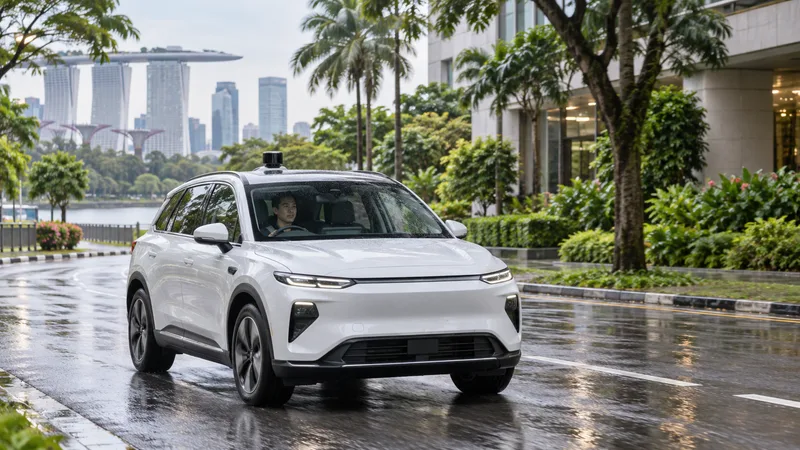
Waymo is targeting 2028 for commercial autonomous ride-hailing in Singapore. Its September plan first calls for vehicles to arrive in the coming months, followed by a 2027 readiness phase in which trained specialists drive manually while the system adapts to local roads and monsoon conditions. Singapore’s transport agencies have outlined an approval process and are still developing broader rules for driverless ride-hailing.
The announcement is a company roadmap, with public rides subject to safety assessments and regulatory approval. The government’s October 6 update says a bill and related legal changes are likely in the second half of 2027; the final framework has not been published.
A staged route to public rides
Waymo’s September 17 announcement sets out three stages. Its all-electric Jaguar I-PACE fleet is expected in Singapore in the coming months as it establishes local operations. During 2027, trained autonomous specialists are expected to drive manually while adapting the Waymo Driver to local road geometry, monsoon weather and other conditions. The company then intends to begin fully autonomous commercial ride-hailing through the Waymo app in 2028.
The manual-driving phase matters because vehicle arrival and local preparation are different from passenger service. Waymo’s plan does not say that members of the public will be able to book rides during 2027. Its announcement also does not provide the number of vehicles, service area, fare, passenger capacity or opening month for a future launch.
Singapore’s Land Transport Authority named Waymo as a new autonomous-vehicle operator, alongside ComfortDelGro and Grab. LTA says deployments must meet safety and regulatory requirements and that it will work with Waymo to build public trust. The operator designation does not itself grant passenger-service approval; the agency says vehicles are expected in the coming months and initial manual driving is planned in 2027.
The rules are still being written
The Ministry of Transport says current autonomous-vehicle deployments are governed by the 2017 sandbox rules. Companies seeking to provide revenue passenger services must receive LTA approval after safety and operational assessments. Those are current deployment conditions; the ministry has not published a final licensing and road-traffic regime for driverless ride-hailing across Singapore. Waymo says it is working with MOT and LTA on the expansion.
In an October 6 parliamentary reply, the ministry said it is developing a wider legislative framework for licensing and safety. It expects to table a bill and related legal amendments in the second half of 2027. The ministry said it will draw on existing laws such as the Road Traffic Act and comparable rules overseas, including the United Kingdom. It has not set out final requirements, and the legislative process is separate from Waymo’s company target for 2028.
The announced dates leave open how quickly the bill would pass and required approvals would be completed before a 2028 service. That is an unresolved timing question, not evidence that launch will be delayed or assured.
Driver transition is part of the policy discussion
The Land Transport Authority says the government will help drivers prepare for the autonomous-vehicle transition and will not let deployment move faster than its ability to retrain and support affected drivers. Its statement points to skills training and help for willing drivers moving into roles created by the sector. It gives no count of existing driving jobs that could change, new roles Waymo may create or when any shift in employment would happen.
One r/asksg discussion of Waymo’s entry plan had 244 points and 181 comments in the captured sample. Users raised questions about fares and private-hire drivers. The thread shows issues some users discussed; it does not represent all Singapore residents or measure job losses, rider demand or prices.
What a Singapore rider can conclude now
The next concrete markers are vehicle arrival, manual readiness work in 2027 and publication of the legislation. Waymo has not announced a launch month, fare, route map or general booking access.
Sources & further reading
- Singapore, Next Stop: Bringing Scalable, Safe Autonomous Mobility to the Lion CityWaymo · accessed Oct 12, 2026
- Waymo to be Singapore’s Newest Autonomous Vehicle OperatorSingapore Land Transport Authority · accessed Oct 12, 2026
- Licensing Regime and Road Traffic Regulations for Autonomous Vehicles that Operate as Ride-Hailing Vehicles from 2028Singapore Ministry of Transport · accessed Oct 12, 2026
- Waymo enters Singapore and will be commercialisedReddit, r/asksg · accessed Oct 12, 2026