UK Business Survey: Energy Concern Hits 72% as AI Use Reaches 30%
The ONS survey found 72% of businesses concerned about energy prices and 30% using AI. Among AI-using businesses with at least 10 employees, 6% reported reduced headcount; the measures have different denominators.
What the numbers are
The UK's official business survey found record levels of concern about energy and fuel prices in late September, alongside the highest share of businesses using artificial intelligence since the question was first asked three years ago.
The figures come from Wave 165 of the Business Insights and Conditions Survey, run by the Office for National Statistics. The wave was live from 21 September to 4 October 2026, and the bulletin was published on 8 October. Two caveats belong at the top: BICS is a voluntary survey, its results are described as official statistics in development, and the response rate was 25.7%, with 9,933 responses from a sample of 38,592.
About a quarter of sampled businesses responded. The ONS publishes weighted estimates rather than simple shares of those 9,933 replies; sampling and non-sampling uncertainty remain, and confidence intervals accompany the figures.
Cost concern at the top of the range
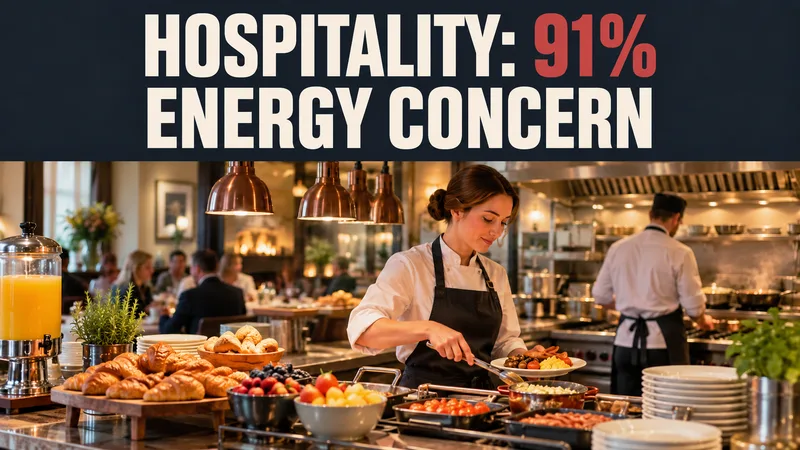
Seventy-two per cent of businesses reported some degree of concern about energy prices in late September, the highest proportion since the question was introduced in March 2026. Accommodation and food service businesses were the most worried, at 91%.
Fuel prices follow the same pattern: 73% reported some concern about increases, the highest since the question was added in May 2026, and transportation and storage had the largest share who were "very concerned", at 60%.
Supply chains, conflict and shipping
Among businesses with 10 or more employees, 48% reported concern about at least one factor affecting supply chains over the next year. That is broadly stable against August, and 17 percentage points higher than September 2025.
The two most frequently reported concerns were the impact of international conflict at 32% and shipping disruption at 21%. The year-on-year move is the larger signal: between September 2025 and September 2026, the share worrying about at least one supply chain factor went from roughly a third to nearly half.
AI adoption reaches three in ten
Thirty per cent of all businesses reported using at least one type of AI technology in September 2026. When the question was introduced in September 2023, the figure was 9%.
Size is the sharpest dividing line. Half of businesses with 100 or more employees reported adopting at least one AI technology, rising to 51% for those with 250 or more employees, against 29% for businesses with fewer than 10 employees.
Information and communication had the highest use by sector at 60%, the top proportion of any industry in the survey. For businesses with 10 or more employees, the most used technologies were text generation with large language models at 21% and visual content creation at 19%.
What AI users say about roles
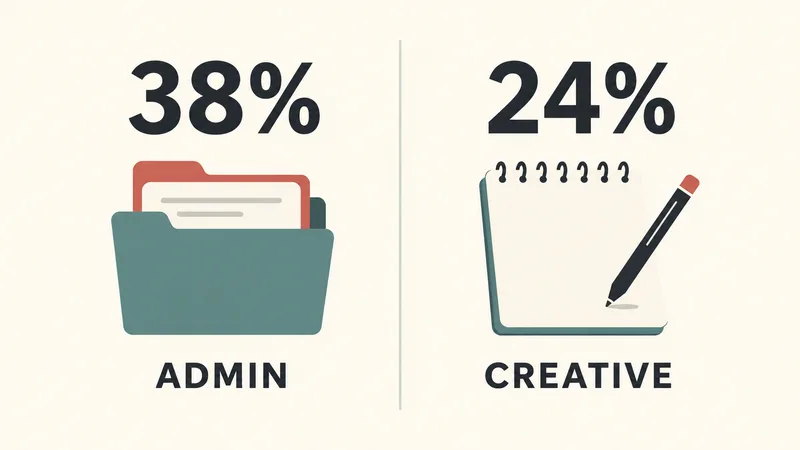
Businesses that use AI were also asked which roles were most affected. Among those with 10 or more employees, 38% said administrative and clerical roles were most affected, up 3 percentage points from June 2026 and 9 points since the question was introduced in December 2025. Creative or design roles came next at 24%, broadly flat since December 2025.
Headcount is a separate question with a quieter answer. Of AI-using businesses with 10 or more employees, 6% reported reduced headcount as a result of adoption, and fewer than 1% reported an increase. Those proportions have been broadly stable over the past year.
These answers measure different things: naming a role as most affected does not by itself show that jobs were cut, while 6% separately reported reduced headcount.
Climate concern back to 2023 levels
Forty-one per cent of businesses reported some concern about the impact of climate change on their business, matching the highest proportion recorded since February 2023 and a 9 percentage point increase from June 2026.
The bulletin also reports trading status: 95% of businesses were trading, with 86% fully trading and 9% partially trading, while 3% had temporarily paused and 2% had permanently ceased trading.
What the survey does and does not cover
BICS samples private sector businesses. It excludes agriculture, oil and gas extraction, energy generation and supply, public administration and defence, public provision of education and health, and finance and insurance.
So the energy concern figure describes businesses buying energy rather than producing it, and the AI adoption figure excludes the public sector. The estimates carry uncertainty from sampling and non-sampling error, which is why the ONS publishes confidence intervals and advises caution in using the data.
The next wave is due on 22 October, which makes this a two-week snapshot rather than a settled trend. The safest reading is directional: cost concern is high and concentrated in specific industries, the supply chain picture worsened over a year, and AI adoption has risen since 2023.
On the workforce question, 30% adoption and 6% reported headcount reduction answer two different questions. The bulletin does not connect them causally, and neither should anyone quoting it.
Sources & further reading
- Business insights and impact on the UK economy: 8 October 2026Office for National Statistics · accessed Oct 12, 2026
- ONS release calendarOffice for National Statistics · accessed Oct 12, 2026