UK Child Seat Plan: What Parents Can Expect and When
The UK plan would require airlines to seat children under 14 beside a parent or accompanying adult without an extra fee. It is not in force, and the updated government release gives no start date.
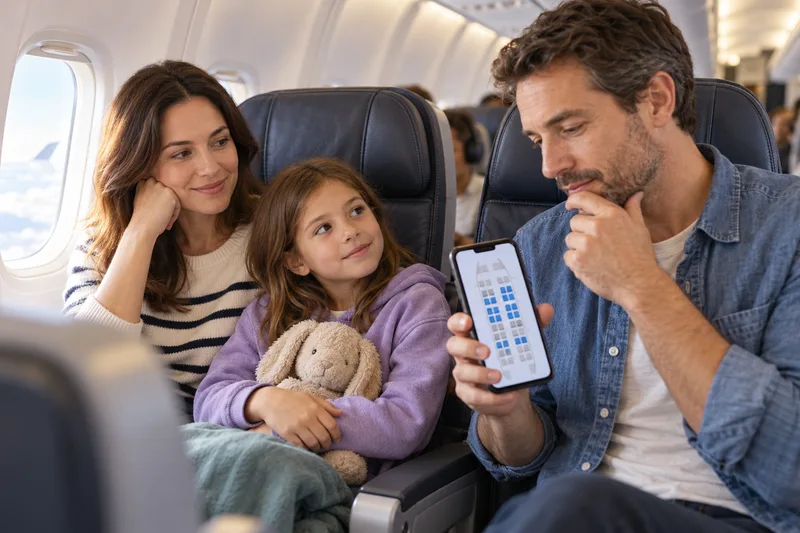
On 2 October 2026, the Department for Transport announced a plan to stop airlines charging extra so a child can sit beside a parent or accompanying adult. It would cover children younger than 14. The plan is not in force, and the updated release gives no start date.
What the government proposed
The proposal concerns the seat arrangement for a qualifying child and adult, not every seat a family might prefer. DfT says a parent and child could face up to £104 in seat fees on a return journey. That is the department’s upper example, not a typical charge or a promise that every route costs that amount.
The release says the changes will follow Royal Assent of the Civil Aviation Bill and industry engagement. On 2 October, DfT removed an earlier implementation date to correct an error. It says it wants the changes in place for next summer’s holidays, but that is a goal rather than a commencement date.
Most UK airlines already offer some protection against hidden costs, DfT says. The proposal is intended to make treatment more consistent across airlines operating in the UK. The same release also proposes free corrections for simple name mistakes, a separate change with no start date in the current announcement.
Several booking details remain open. The release does not say whether airlines would assign adjacent seats automatically or require a request, how they would handle several children or separate reservations, or what would happen when few adjacent seats remain. It also does not promise that a preferred cabin area or extra-legroom seat would be free. The proposal is specifically about seating a child beside a parent or accompanying adult without an extra fee for that arrangement.
What applies to bookings now
The CAA’s current family-seating guidance says airlines should aim to seat children under 12 in the same row as an accompanying adult, or no more than one row or an aisle away. “Should aim” is not a guarantee that a family can choose a particular seat. The CAA also says many airlines charge extra for seat selection, and preferred locations or extra legroom usually cost more.
Separating those charges matters. The CAA says airlines must show the full price upfront, while seat selection can be optional; seats with extra legroom or in a certain part of the plane usually cost more. DfT’s proposal concerns a child sitting beside an adult, not a right to choose any seat. The CAA advises passengers to review airline terms when booking. If family members have separate reservations, ask the airline how its current seat-allocation policy handles that arrangement.
The age boundary matters. The proposed DfT plan covers children younger than 14, while the CAA guidance refers to children under 12. A family with a 12- or 13-year-old should not assume the proposed rule has already changed today’s booking terms. For a ticket booked now, the airline’s current family-seating policy still applies.
What families can check before flying
Before paying to choose seats, read the airline’s current family-seating and seat-selection rules. Check the seat assignment for every flight in the itinerary and keep the booking confirmation. For a codeshare, identify which carrier operates each leg; the CAA notes that this can affect check-in procedures. If a schedule change separates the group, contact the airline under its current policy.
The DfT announcement is not a current refund rule. A fee charged under an airline’s existing booking terms is not automatically refundable because a future plan has been announced. Before relying on free adjacent seats, look for an official start date and the airline’s final instructions for assigning family seats.
The separate name-correction proposal also has no start date. DfT cites charges of up to £40 for simple booking errors, but that figure describes its example, not a fee every passenger pays.
Sources & further reading
- Take off for passengers as government scraps extra charges when flyingUK Department for Transport, GOV.UK · accessed Oct 12, 2026
- Planning your tripUK Civil Aviation Authority · accessed Oct 12, 2026