What the New Transparency in Coverage Rules Require of Health Plans in 2027
The departments of Labor, Health and Human Services and the Treasury published final Transparency in Coverage rules on 6 October 2026, effective 7 December 2026, that change how health plans and insurers publish price files. Reporting moves to the provider network level, the files go from monthly to quarterly from 6 March 2027, contextual files and a website footer follow on 6 September 2027, and every machine-readable file needs an attestation.

Three federal departments published final rules on health plan price transparency on 6 October 2026, and the changes fall on employers, insurers and the vendors that build their public price files. Most of the new requirements take effect in 2027, on two different dates, and the rules add an attestation that a named plan or issuer has to stand behind.
The rules amend requirements under the Public Health Service Act, the Employee Retirement Income Security Act of 1974 and the Internal Revenue Code. They cover non-grandfathered group health plans and health insurance issuers offering non-grandfathered group or individual coverage. The document was published in the Federal Register on 6 October 2026, runs from page 63748 to page 63867, is designated significant, and takes effect on 7 December 2026. The departments estimate the changes will save users of the data about $9.2 million a year.
What the rules cover
The 2020 transparency rules require plans and issuers to publish machine-readable files on a public website: in-network provider rates, out-of-network allowed amounts with billed charges, and prescription drug negotiated rates and historical net prices. Those obligations stay. What the new rules change is how the first two files are built, how often they are refreshed, what accompanies them and what a plan has to attest to.
Three dates, not one
For the price comparison provisions, plans and issuers must comply for plan years, and in the individual market for policy years, beginning on or after 1 January 2027. Until then the earlier versions of those rules apply.
For the machine-readable file provisions, the departments kept a transition period of five months after publication, which is 6 March 2027, for the in-network rate file, the allowed amount file and the attestations. The contextual files and the website footer get eleven months, which is 6 September 2027.
Rates are reported by provider network
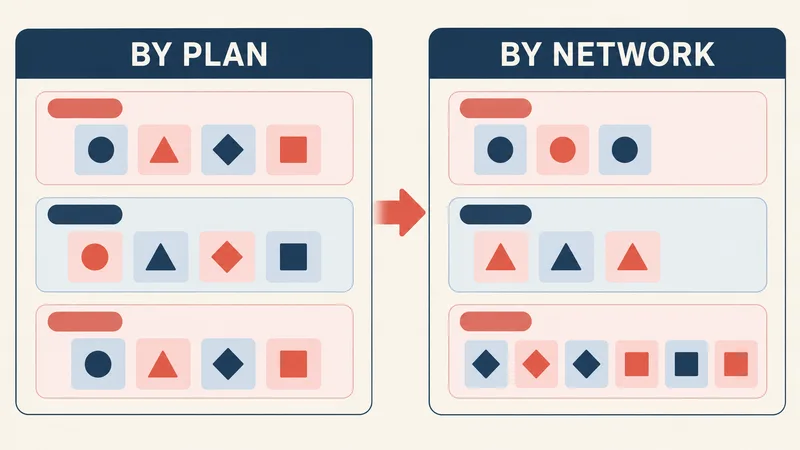
The largest structural change is the level of reporting. Plans and issuers must publish negotiated rates at the provider network level instead of the plan or policy level, and the rules add data elements including product type, provider network name and provider network identifier, so a reader can tell which network a rate belongs to.
The rules also remove provider and rate combinations that are unlikely to be used, which cuts the volume of published data. The departments note that researchers have estimated combined monthly in-network rate files across the industry at over one petabyte, and say the changes reduce both the number and the size of the files. Reporting frequency moves from monthly to quarterly for the in-network rate and allowed amount files. The departments calculate that this reduces annual downloads from 3,600 to 1,200, based on 300 third-party developers and users.
More claims stay in the allowed amount file
For the allowed amount file, the rules lower the claims threshold for omitting allowed amount and billed charge data from 20 claims to 11, which keeps smaller volume arrangements in the published data. A determination about that threshold should rest only on information within a service provider's control, the departments say, so no provider has to aggregate another provider's data. The lookback period for historical data grows as well, from 180 days to 9 months, which the departments describe as increasing it by about 50 per cent.
Four new contextual files
The rules create four contextual machine-readable files. A change-log file records changes to the data, a utilization file describes how the data was used, a taxonomy file supports the coding, and a text file helps users find the in-network rate, allowed amount and prescription drug files. A footer carrying website URLs is also required on the machine-readable files, so someone who downloads a file can find where it came from.
Attestation, and price information by phone
For each machine-readable file, a group health plan or issuer must attest that, to the best of its knowledge and belief, it has included all applicable information and that the encoded information is true, accurate and complete as of the date in the file. The departments added the requirement after many commenters asked for it.
Separately, pricing information already available through an online consumer tool and on paper must also be available by phone. The departments clarify that the 20-provider limit applies separately to the two methods, so a plan or issuer has to provide cost-sharing information for at least 20 providers per day by paper and at least 20 per day by phone when both are requested. Satisfying that requirement also satisfies section 114 of the No Surprises Act, including for grandfathered group health plans and issuers that are not otherwise covered by these rules.
What the departments count as the saving
The departments estimate total annual savings of roughly $9.2 million for third-party developers and other users of the data, made up of $8.1 million in labor savings and $1.1 million in storage savings from quarterly rather than monthly reporting. They did not separately quantify savings from the contextual files or the added data elements.
Two limits are worth noting. The underlying disclosure obligations do not change, so plans and issuers still have to publish the files. And the transition period is shorter than the twelve months the departments originally proposed: five months for the main file changes and eleven months for the contextual files and the website footer.
Sources & further reading
- Transparency in Coverage (final rule, 91 FR 63748)Office of the Federal Register · accessed Oct 12, 2026
- Federal Register API record for document 2026-20447Office of the Federal Register · accessed Oct 12, 2026
- Full text of the Transparency in Coverage final ruleOffice of the Federal Register · accessed Oct 12, 2026