Spotify Audiobooks Go Global: Which Markets Are Live and What Each Plan Includes
Spotify said on October 7 that audiobooks will reach more than 180 markets by the end of 2026, up from 22, starting with more than 350,000 titles in the new markets. Eligible Premium subscribers get 12 hours a month in some countries, other markets use the Audiobooks+ add-on, and prices and per-market dates are still unpublished.
Spotify will offer audiobooks in more than 180 markets by the end of 2026, up from 22 today, the company said on October 7 at the Frankfurt Book Fair. Listeners in the new markets will have access to more than 350,000 titles in more than 120 languages, including new Spanish, Portuguese, Italian and Polish catalogs, and Spotify says the expansion brings books to more than 750 million people. What each listener gets depends on the market and the plan, and several of those details are still unpublished.
What Spotify announced
Spotify published the change as a newsroom post on October 7 and described it as an extension "from 22 markets to over 180" through the end of the year. Audiobooks first came into Premium three years ago this fall, the post notes, and every publisher partnership behind the catalog is non-exclusive. Owen Smith, Spotify's vice president of audiobooks, said books "change how we see the world, and the people in it," and that reaching more than 180 markets means millions more people can discover them. The market list is long: it runs from large markets such as India and Brazil to smaller ones including Kenya, Sri Lanka and Czechia.
Which markets are live, and which come next
Spotify's post gives one deadline, the end of 2026, and no per-market dates. Trade coverage has filled in part of the schedule. Publishers Weekly reported that the rollout began on October 7 in Colombia, Italy, Mexico and Spain, that Argentina, Brazil, Norway and Poland follow on October 15, and that Portugal arrives on November 12, with the remaining markets switched on in batches. Publishing Perspectives reported the same October 7 start for Mexico and Colombia and said the phased rollout should reach Europe, the Americas and the Caribbean, the Middle East, Africa and Asia by the end of November.
Those dates come from trade reporting rather than from Spotify, and most markets still have no published day. Publishers Weekly also reported the language catalogs in the first wave: more than 45,000 Spanish titles, more than 20,000 in Polish, more than 14,000 in Italian and more than 6,000 in Portuguese. Every new market also opens with an English-language catalog of more than 350,000 titles.
Three ways to listen, and what each includes
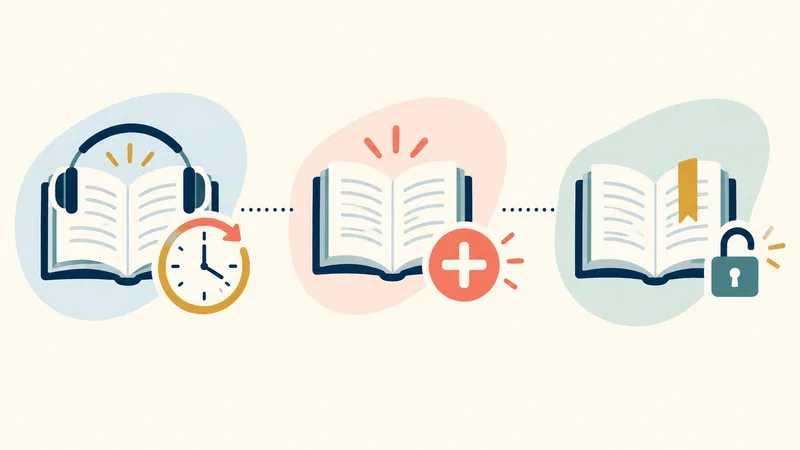
Eligible Premium subscribers get 12 hours of audiobook listening a month inside their plan. Spotify named Italy, Spain, Portugal, Brazil, Mexico, Colombia, Poland, Chile, Norway and Peru as markets receiving that option, followed by "and more." Any listener can add Audiobooks+ for extra hours each month, and the add-on is the primary route to audiobooks in markets across Africa, Asia and Argentina. On Premium Family and Duo plans it provides 15 hours a month. A third option, buying a single title outright, is open to everyone, and local self-published authors can upload local-language titles through Spotify for Authors.
Spotify's support pages cover details the announcement leaves out. The monthly hours attach to Premium Individual, Premium Family and Premium Duo, and the Student plan does not include them. Payment for one title happens on the web, although playback runs in the app, and an unlocked title can be downloaded for offline listening on Premium and on the free tier. Pricing varies by market, and Spotify has published no country-by-country list.
Why one member of a Duo or Family plan gets the hours
Only the plan manager can use the audiobook listening time included in a plan, according to Spotify's support page, and the hours cannot be shared with the other member. A manager who wants the second person to have hours has to buy a separate allowance.
Listeners have noticed. In a thread posted on r/truespotify on September 21, a subscriber wrote that Duo includes two Premium accounts but only one receives listening credits; commenters pointed to the plan-manager note and said family accounts behave the same way. The thread shows the confusion, and the support page is where the rule itself is written.
How the monthly hours are counted
Spotify counts listening time at normal speed. A five-hour audiobook finished in two and a half hours at double speed still uses five hours of the allocation, and relistening to a book uses it again, according to the support page. Titles bought separately do not count against the monthly hours. Unused listening time expires at the start of the next billing period, with no refunds, while one-time top-ups remain valid for 12 months and add-on hours are deducted after the hours included in the plan.
The allowance is not the same everywhere. Spotify says the number of hours varies per country and that it may adjust the allocation with advance notice. Publishers Weekly reported the earlier Premium allocation as 15 hours a month when audiobooks were added to Premium; the October 7 announcement gives 12 hours for eligible Premium subscribers in the new markets.
Page Match now works by page number
Page Match, introduced in February, links a printed or digital copy of a book to its audiobook so a reader can switch between them. The version arriving with the expansion adds page numbers: scanning a book's ISBN barcode tells Spotify where the reader has reached. More than one million readers have used the feature since February, the announcement says, and it works in more than 30 languages. Premium subscribers and Audiobooks+ members use it against their monthly hours, while free users use it with titles they bought.
The business behind the expansion
Audiobooks+ has passed one million subscribers and is generating more than $100 million in annual recurring revenue a little over a year after launch, Spotify says. Monthly audiobook listeners grew nearly 40% over the past year and listening hours climbed more than 30%. Publishers Weekly reported that Spotify now works with almost 300 publishers and that a partnership with ElevenLabs lets authors produce AI-narrated audiobooks; Spotify's post stresses that its publisher deals are non-exclusive.
Two official pages describe the catalog at different sizes. The announcement says listeners in the new markets can reach more than 350,000 titles. Spotify's Books hub says there are over 700,000 audiobook titles on Spotify. The company has not explained the difference.
Missing prices, dates and market details
Spotify has published no prices for the new markets, and the only calendar is the batch schedule reported in trade press. It has also not said which local plans include the 12 hours outside the countries it named, how many titles each market will carry, whether free listeners can stream the subscriber catalog instead of buying single titles, or whether AI-narrated books will appear in the new catalogs. For most listeners the practical answer is that access is due this year, while the price and the exact date will have to be confirmed in each market.
Sources & further reading
- Audiobooks on Spotify Are Going GlobalSpotify (newsroom) · accessed Oct 12, 2026
- Audiobooks in Premium plansSpotify (support documentation) · accessed Oct 12, 2026
- Unlock AudiobooksSpotify (support documentation) · accessed Oct 12, 2026
- Spotify: AudiobooksSpotify (newsroom topic page) · accessed Oct 12, 2026
- How to Use Page Match to Seamlessly Switch Between a Book and Its Audiobook on SpotifySpotify (newsroom) · accessed Oct 12, 2026
- Frankfurt Book Fair 2026: Spotify Expands Audiobooks to 180 MarketsPublishers Weekly · accessed Oct 12, 2026
- Spotify's Next Audiobook Market? YoursPublishing Perspectives · accessed Oct 12, 2026
- Search results for the Spotify audiobook expansion, past-month filterBing News (search-result snapshot) · accessed Oct 12, 2026
- Spotify Duo Includes 2 premium memberships but only 1 gets to listen to audiobooks.Reddit (r/truespotify) · accessed Oct 12, 2026