The Jalapeno Salmonella Outbreak Is Over. Some Dips and Salsas Are Still Recalled.
The FDA closed its Salmonella Javiana investigation on October 2, 2026 after 488 illnesses in 34 states. Fresh jalapenos are past shelf life and gone from sale, but dips, salsas, guacamole and salads that other companies made from the recalled peppers still carry recall notices.
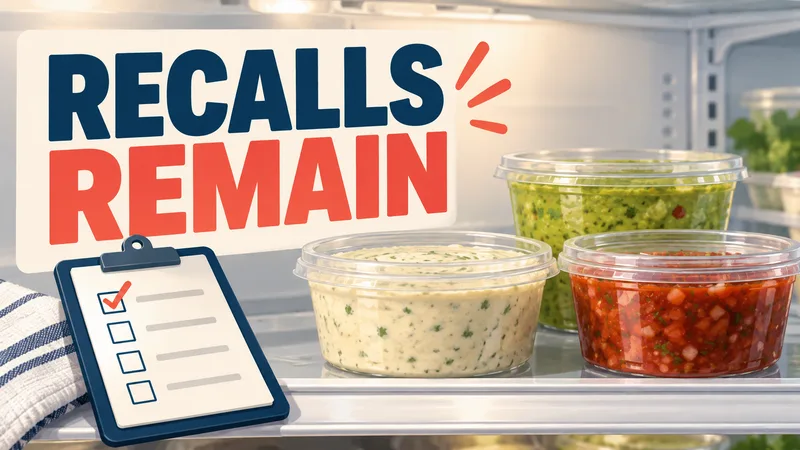
On October 2, 2026, the Food and Drug Administration closed its investigation into the Salmonella Javiana outbreak linked to jalapeño peppers, and the Centers for Disease Control and Prevention declared the outbreak over. The same advisory still tells consumers to check their homes and discard recalled products. The fresh jalapeños are past their shelf life and no longer for sale, so the remaining task concerns what other companies made from them.
Dips, salsas, guacamole, salads and sandwiches produced with the recalled peppers reached grocery shelves under brands including Trader Joe's, Walmart's Freshness Guaranteed, Target, Whole Foods, Kroger's Private Selection and Hannaford. Some were frozen. The labels that identify them are published.
What the federal investigation actually found
The FDA and CDC counted 488 people infected with the outbreak strain across 34 states, with 65 hospitalizations and no deaths. Illnesses began between June 16 and August 26, 2026. Among 308 people interviewed, 281, or 91 percent, reported eating at a Mexican-style restaurant before they became ill, naming Chipotle Mexican Grill and QDOBA among them, with meal dates from June 14 to July 29.
That restaurant detail shaped everything that followed. Traceback work pointed to a common grower in Sinaloa, Mexico, that supplied Coast Citrus Distributors, the importer that moved the peppers to distributors, restaurants and food service companies. Coast Citrus recalled a limited batch of jalapeños in generic Coast Tropical bulk packaging on July 22, 2026, then agreed on August 5 to recall the remaining jalapeños tied to the outbreak.
Chipotle had already switched jalapeño suppliers for affected stores on July 20, and QDOBA stopped using jalapeños in its restaurants on July 28. The FDA stated that it did not consider there to be a current ongoing risk from those two chains once the product was removed.
Why the recalls did not stop when the illnesses did
Peppers sold fresh to a restaurant kitchen have a short life. A dip made from those same peppers, packed in a sealed tub and frozen, does not. Once recalled jalapeños entered other companies' production lines, the ingredient moved into finished products with their own production dates and their own best-by windows, and those products reached retail distribution centers in states far from the original growing and packing operation.
The FDA collected the downstream recalls on a single Major Product Recalls page. The table has five entries, announced between August 8 and August 12, 2026:
| Announced | Company | Brand on the package | Products |
|---|---|---|---|
| August 8 | NatureBest Precut & Produce | NatureBest, HEB | Pico de gallo, stuffed mushrooms, soup mix |
| August 9 | Taylor Fresh Foods | Trader Joe's, Freshness Guaranteed and others | Dips, salsa, guacamole, salads, sandwiches |
| August 11 | Salata Dressings | Salata | Jalapeño avocado dressing |
| August 12 | Whole Foods Market | Whole Foods | Salsas, guacamole, pico de gallo, prepared foods |
| August 12 | Dairyland Produce | Hardie's Fresh Foods | Jalapeño peppers, 5 lb |
Each company published its own distribution footprint and its own date codes, and the footprints do not match. NatureBest sent products to stores in Texas and Louisiana between July 3 and August 5. Taylor Fresh Foods sent products to retail distribution centers in 27 states with a Best If Used By date up to and including August 16. Whole Foods sold its recalled items online and in produce and prepared food departments in Texas, Oklahoma, Louisiana, Arkansas, Wisconsin, Michigan, Illinois, Indiana, Iowa, Missouri, Kentucky and Ohio, with best-by dates between August 7 and August 16. Salata's dressing went to HEB grocery stores in Texas between July 13 and August 5, in 12-ounce bottles with best-by dates in November 2026.
Which packages to check against your own kitchen
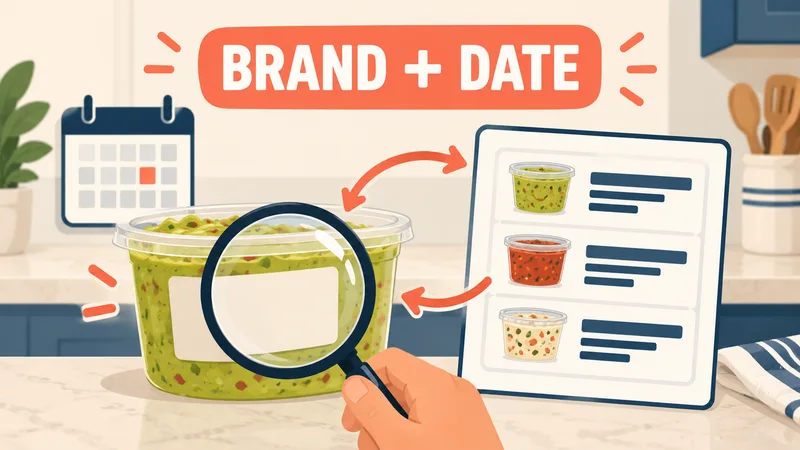
The store name is the fastest way in, because several retailers sold the same product under different labels. The brands to look for are Trader Joe's, Freshness Guaranteed, Private Selection, Taylor Farms, Salata, NatureBest, HEB and Hardie's Fresh Foods, alongside unbranded deli and prepared food containers from Whole Foods, Kroger, Target, Hannaford and Stop and Shop.
Where a fresh pepper is concerned, no label answers the question. Bulk jalapeños carry no grower name and no state of origin at the point of sale, so a shopper could not have told whether a pepper came from the Sinaloa grower. The FDA's advice for businesses, rather than consumers, was to work with suppliers to establish a source and to discard the product if it came from Coast Citrus. The agency also told distributors, restaurants and food service companies to clean and sanitize any surface or container the recalled peppers had touched.
For recalled prepared products, the instruction is simpler. Do not eat them. Discard them or return them to the place of purchase for a refund, and follow the directions in the individual recall notice.
Where the trail ended
The FDA visited a common Mexican distributor identified through traceback and inspected operations, records and samples. No jalapeños were available for sampling at the time, and the environmental samples that were collected all came back negative for Salmonella. The agency stated that it was unable to determine a route or source of contamination.
Two other agencies touched the same supply chain. The USDA's Food Safety and Inspection Service issued a public health alert for meat and poultry products containing the FDA-regulated jalapeños, covering items that fall outside FDA's recall authority. The FDA later recommended that manufacturers holding recalled jalapeños consider whether their own products needed a recall and contact a recall coordinator.
What consumers still cannot check
The advisory does not publish case counts by product, the volume of each downstream recall, or how much of it was recovered. No national lookup maps a recalled date code to the store that sold it, so matching a container in a freezer to a recall notice means reading the label against the notice by hand.
The fresh peppers are the one part of this outbreak that resolved itself. Jalapeños bought now are not part of it, because the implicated supply was recalled in August and the product is past its shelf life. Recalled prepared foods, including the frozen ones, are the part that can still sit at the back of a freezer.
Sources & further reading
- Outbreak Investigation of Salmonella: Jalapeno (August 2026)U.S. Food and Drug Administration · accessed Oct 12, 2026
- 2026 Recalls of Food Products Associated with Fresh Jalapenos from Sinaloa, Mexico and distributed by Coast Citrus Distributors due to the Potential Risk of SalmonellaU.S. Food and Drug Administration · accessed Oct 12, 2026
- Taylor Fresh Foods Recalls Products Made with Jalapeno Peppers Because of Possible Health RiskU.S. Food and Drug Administration (company announcement published as a public service) · accessed Oct 12, 2026
- Recall of Jalapeno Avocado Dressing Because of Possible Health RiskU.S. Food and Drug Administration (company announcement published as a public service) · accessed Oct 12, 2026
- Additional Information about RecallsU.S. Food and Drug Administration · accessed Oct 12, 2026
- Recalls, Market Withdrawals, & Safety AlertsU.S. Food and Drug Administration · accessed Oct 12, 2026