Pimple Popping Squishy Toys With Needles: What to Check and Whether You Get a Refund
OPSS told the public on 9 October 2026 to stop using pimple popping squishy toys sold with needles, and seven Product Safety Reports list the affected marketplace listings. The notices are product safety reports, so the recorded remedy is marketplace delisting rather than a recall, and identification depends on the ASIN or item number behind the listing.
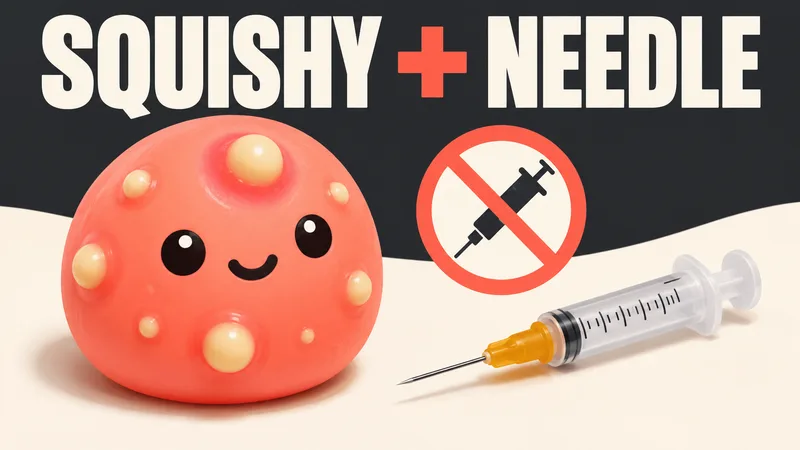
OPSS told the public on 9 October 2026 to stop using Pimple Popping Squishy toys sold with needles or syringes that have a sharp point. The warning closed an urgent investigation the regulator had opened after reports that the toys were being sold on the UK market. Online marketplaces have already been told to take the listings down.
What the seven notices cover
Every one of the seven reports describes the same kind of product and the same hazard. A squishy toy with a pimple face is supplied with a needle or a syringe. The advertised way to use it is to push the needle in to raise a bubble, or to inject a substance that the user then squeezes, pops or bursts. OPSS says the sharp point could puncture the skin and present a risk of injury, and that the product does not meet the requirements of the Toys Safety Regulations 2011.
Each report names a different online marketplace. The set as published on 9 October covers Amazon, eBay, Fruugo, OnBuy, AliExpress, Alibaba and Wish. A separate notice dated 8 October for a Pop Bubble Fidget Toy Keyring records import rejection at the border. The seven Pimple Popping Squishy reports all carry the same date, the same alert type, the same product category and the same measure type.
Many of these toys are marketed as adult stress toys, which OPSS says does not take them outside toy rules. The same news story describes a risk of injury to people of all ages including children. On the notice form itself, all seven reports leave the risk level marked "not provided", so the notices do not grade the hazard they describe.
Why a removed listing is not a recall
OPSS's guidance for consumers sets out three kinds of notice. A product recall is for a specific product sold in the UK and may require the buyer to act to get a free replacement, repair or refund from the manufacturer or a retailer. A product safety report is for a specific product found in the UK where corrective measures other than a recall have been ordered by an authority or are being taken by a business. A product safety alert highlights a category or sector where OPSS wants immediate steps from businesses, authorities and possibly consumers.
Everything in this case sits in the middle category. The recorded corrective action on all seven is that the marketplace removed the listing, and the reports also carry the instruction to stop using the product immediately. What they do not carry is an offer of a replacement, a repair or a refund, because that is what the recall category is for.
So the notice by itself gives a shopper no refund route. OPSS publishes a separate route for reporting a product that is unsafe and may have caused injury or damage, through the Citizens Advice consumer helpline in England and Wales, Advice Direct Scotland in Scotland, or a local district council in Northern Ireland. The same guidance says you may be entitled to a refund, a replacement or a repair if there is a safety issue with a product you own. What the report does not do is settle that claim for you.
Matching your item to a notice
With no brand or model to search for, and the country of origin recorded as unknown on every report, identification runs through the identifiers attached to each listing.
Amazon's report carries six ASINs, among them B0GF7Q9HF7 and B0G9L85KLF. eBay's lists four item numbers, including 128045089625 and 389917528320. AliExpress's lists eight, such as 1005009515228420 and 1005012100519771, and Alibaba's lists seven. OnBuy works differently: it prints an OPC code and an item number for each of its four listings. Fruugo lists two listing names rather than codes, and Wish records a single listing name and ID.
The practical route is to open your order history, find the item, and compare its ASIN or item number against the matching report: Amazon against the Amazon report, eBay against the eBay report, and so on. Listing names are a weaker match, and across these reports they are inconsistent: the same style of toy shows up as a "Face Pimple Popping Fidget Toy with Pigment", a "Refillable Pimple Silicone Squeeze Toy with Pigment" and a "Textured Moldable Sensory Fidget Toy For Adults".
Each report also prints a PSD notification number. The Amazon page gives 2610-0037 and the eBay page 2610-0032, which match the numbers in their own URLs. The Fruugo page does not: it shows 2610-0037 as well, so that field alone is not a reliable way to tell two notices apart.
Disposing of the needle without a second injury
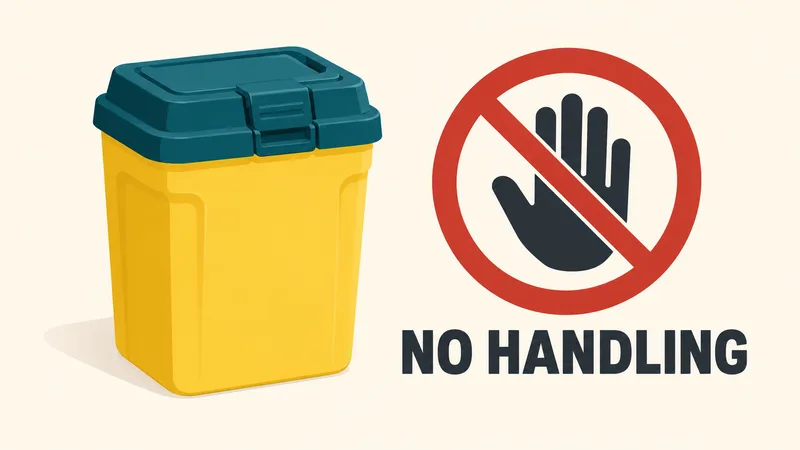
Do not handle the needle. Put it in a puncture-resistant container, secure the lid so the needle cannot protrude or cause injury, and keep the container out of reach of children until it can be disposed of safely.
For the container itself, the reports send you to your local authority's website for guidance on sharps disposal in your area. A pharmacy or GP surgery may accept sharps, but availability varies, so the instruction is to check before you travel.
The reports give the reason for treating the accessory as a sharp rather than as a toy part: safe and appropriate disposal reduces the risk of injury and potential infection.
What the reports leave open
No brand is named anywhere in the seven notices, and the reports do not say how many units were sold or how many listings existed before removal. In the same news story OPSS says marketplaces must keep removing dangerous products and warn consumers of the risk, which frames the removal as an ongoing duty rather than a finished action.
Nothing here covers the same kind of toy bought from a shop, a market stall or a site that is not on the list. A shopper in that position has the product description to work from and no identifier to check, which leaves the object itself as the test: a squishy face supplied with a needle or a syringe.
Where the toy matches and a needle is present, the instruction is to stop using it now. Disposal comes first, and any claim against a seller is a separate question that the notice does not answer.
Sources & further reading
- Stop using pimple popping toys with needles, says OPSSOffice for Product Safety and Standards, GOV.UK · accessed Oct 12, 2026
- Product Recalls and AlertsOffice for Product Safety and Standards, GOV.UK · accessed Oct 12, 2026
- Product Safety Report: Pimple Popping Squishes containing needles sold via Amazon (2610-0037)Office for Product Safety and Standards, GOV.UK · accessed Oct 12, 2026
- Product Safety Report: Pimple Popping Squishes containing needles sold via eBay (2610-0032)Office for Product Safety and Standards, GOV.UK · accessed Oct 12, 2026
- Product Safety Report: Pimple Popping Squishes containing needles sold via AliExpress (2610-0049)Office for Product Safety and Standards, GOV.UK · accessed Oct 12, 2026
- Product Safety Alerts, Reports and RecallsOffice for Product Safety and Standards, GOV.UK · accessed Oct 12, 2026