Hall and Woodford Win the 2026 Economics Nobel for the Models Central Banks Use
Robert E. Hall and Michael Woodford won the 2026 economics prize for work behind New Keynesian models. Their research helps explain how central banks respond to supply shocks.
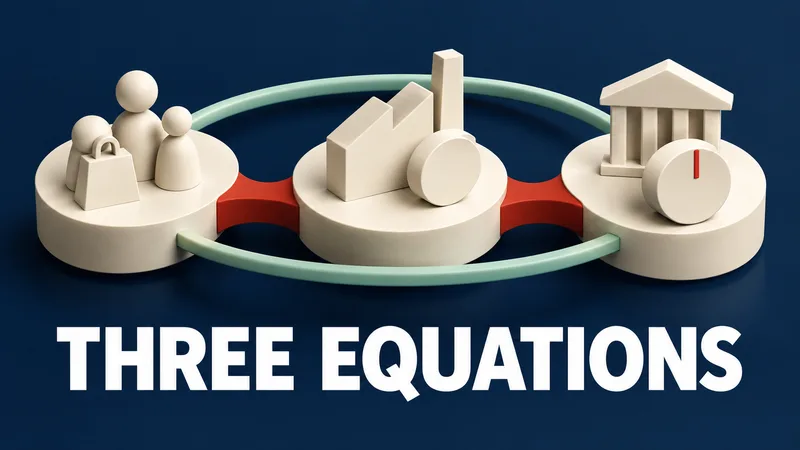
Robert E. Hall and Michael Woodford won the 2026 Prize in Economic Sciences on 12 October 2026 for "microeconomic foundations of macroeconomic stabilisation," and the Royal Swedish Academy of Sciences split the 12 million Swedish kronor equally between the two.
The citation names the kind of model that central banks and finance ministries work with when they weigh an interest rate change. Hall is a professor at Stanford University in California; Woodford is a professor at Columbia University in New York. Both took doctorates at the Massachusetts Institute of Technology, Hall in 1967 and Woodford in 1983.
The Academy's press release says the laureates "have developed new macroeconomic models that have significantly improved our ability to implement effective stabilisation policy." Stabilisation policy covers the measures that governments and central banks take to even out the peaks and troughs of an economy, using policy rates, taxes and transfers such as child benefit. The aim is to keep unemployment and inflation from settling at extreme levels, since long slumps and long inflations hit households with the least room to absorb them hardest.
Why the models in use broke in the 1970s
The case for demand management goes back to John Maynard Keynes. If total demand falls short of what an economy can produce, unemployment rises; if demand runs ahead, prices climb. Governments can accelerate or brake. The models built on that idea assumed the statistical links between inflation, consumption, unemployment and output were stable enough to steer by, including the Phillips curve relationship in which inflation tends to be low when unemployment is high, and the assumption that consumption follows households' total disposable income.
The oil crises of the 1970s upset those assumptions. Inflation rose while unemployment was already climbing, and the link between income and consumption proved weaker than the models needed. Stimulus arrived at the wrong time, and the West spent a decade with low growth, high unemployment and high inflation.
Robert E. Lucas Jr., the 1995 laureate, argued that the fault lay in assuming stable macro relationships at all. A model that is going to hold up, he argued, has to be built from the decisions underneath: the pricing choices of thousands of businesses, the spending choices of millions of households.
Building that way was easier said than done, and the hardest piece was consumption. Earlier theory held that a household's spending depends at least as much on what it expects to earn in future as on what it earns now. Tax, interest rate and inflation changes all move those expectations, and nobody can read them directly.
Hall's test: consumption that cannot be forecast
Hall's 1978 article approached that problem from the other side. If spending tracks expectations of future income, then spending decisions are themselves the measure of those expectations, and households will revise their spending only when new information arrives. New information cannot be predicted, or it would not be new. So changes in consumption should not be predictable either, and a researcher can test the theory by trying to forecast them.
Nothing much worked, which the Academy treats as the point. Once the benchmark existed, departures from it became informative, because households that cannot borrow or have no savings live from one payday to the next and can be counted. Hall and Fredric Mishkin used household microdata in 1982 and found that about 80 per cent of households behaved in line with the theory. The share moves over time and varies between countries, but it can be estimated. That split between forward-looking households and hand-to-mouth households sits inside the models central banks use today.
Woodford's three equations
In his 2003 book Interest and Prices, Michael Woodford assembled a complete New Keynesian model on those microfoundations. Its three equations became the prototype for the models that followed, and the Academy describes the result as a laboratory for policymakers: what happens to output and inflation if the rate comes down, and how far should rates rise to bring inflation back.
Consumption in the model carries Hall's result, and it also responds to the interest rate. Lower rates make saving less rewarding, so spending today rises relative to expected spending later. Only a neutral rate, the natural rate that Knut Wicksell described in the late nineteenth century, leaves consumption roughly where it was. Following Wicksell, Woodford showed that a central bank can stimulate or restrain activity by moving interest rates rather than by changing the quantity of money in circulation, which made these models usable in day-to-day policy.
Prices in the model are sticky, because changing them is costly for a business. When a business does reset a price, it looks forward, which means expectations about future interest rates feed into inflation now. Credibility and clear communication therefore become part of how monetary policy works, an idea that was absent from the older toolkit. The Academy credits Woodford with introducing the output gap, the distance between actual output and the output that would prevail if prices moved freely, as a way to describe demand pressure. A positive gap pushes prices up, and stabilisation policy tries to steer the gap toward zero.
Why a supply shock can call for higher rates
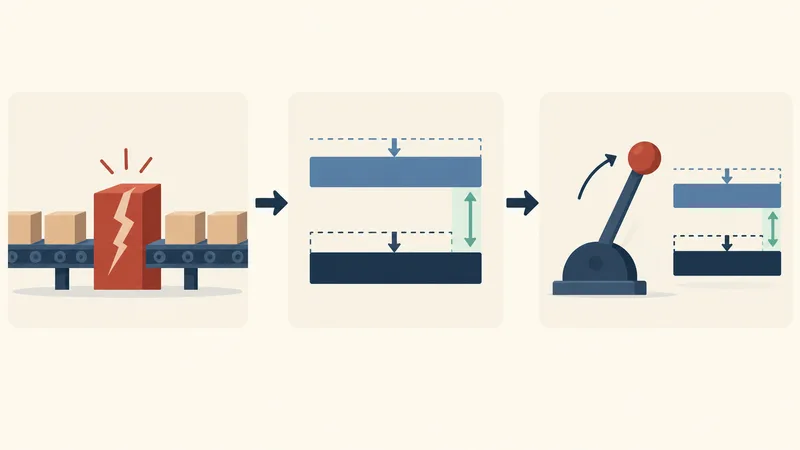
A jump in energy prices or a break in international supply chains can lower an economy's natural output without lowering demand by as much. The gap then turns positive even though output has not risen, and a negative supply shock can deliver inflation, weaker output and higher unemployment at the same time. Here the model points to a cooling measure, such as a higher policy rate, rather than stimulus. The Academy says that guidance is why central banks handled the energy shocks of recent years better than the oil crises of the 1970s.
What the models are used for now
New Keynesian models are in use at central banks and finance ministries around the world, according to the Academy, which notes that Sweden's central bank runs its own version adapted to Swedish conditions. John Hassler, who chairs the committee for the prize in economic sciences, says the laureates' work provided "a stable theoretical foundation" for those models, and that policymakers are better equipped with them to deal with shocks such as energy crises or sudden changes in how much households consume.
The Academy also credits the research with making major macroeconomic crises easier to manage than before, citing the pandemic and the energy crises of recent years, and observing that recessions and episodes of high inflation have not disappeared but last less long. It describes New Keynesianism as the start of a line of research rather than its last word, and says the models have been refined since the laureates published and will keep changing as economies change.
Sources & further reading
- The Prize in Economic Sciences 2026 (press release)The Royal Swedish Academy of Sciences · accessed Oct 12, 2026
- Microfoundations deliver macro insights (popular science background, 7 pages)The Royal Swedish Academy of Sciences · accessed Oct 12, 2026
- Nobel Prize API record for the 2026 Prize in Economic SciencesNobel Prize Outreach · accessed Oct 12, 2026
- Scientific background on the 2026 Prize in Economic Sciences (57 pages, read in search mode only)The Royal Swedish Academy of Sciences · accessed Oct 12, 2026
- Prize in Economic Sciences 2026, press release pageNobel Prize Outreach · accessed Oct 12, 2026