Graziers Raw Milk Cheese Recall: Four Varieties, Ten Products, No Lot Code to Check
Sierra Nevada Cheese Company recalled all Graziers raw milk cheese on 24 September 2026 over E. coli O26:H11, without narrowing it to a lot, date code or production date. The company's product list covers four varieties, Monterey Jack, Jalapeño Jack, medium cheddar and sharp cheddar, sold as ten products including a 40-pound cheddar block, and the FDA counts 13 illnesses, 8 hospitalizations and 3 cases of hemolytic uremic syndrome.
Sierra Nevada Cheese Company recalled all of its Graziers Raw Milk Cheese on 24 September 2026 after the FDA linked the products to a multistate outbreak of E. coli O26:H11. The company's own product list narrows the check: four raw milk varieties, ten separate products, and no code to match. The company said the investigation had not been narrowed to a specific lot, date code or production date.
The FDA published the company's announcement on 29 September 2026, and the announcement itself is dated 28 September. Both come after the 24 September recall. The FDA outbreak advisory has separate update dates, which matter when checking how current the case counts are.
Four varieties, ten products, and the sizes that carry them
The varieties are Monterey Jack, Jalapeño Jack, medium cheddar and sharp cheddar. Those four reach the market as ten listed products, and the package is what separates them:
- 8-ounce squares of all four varieties, each with its own UPC
- a 16-ounce medium cheddar brick
- 5-pound loaves of all four varieties, sold by item number
- a 40-pound cheddar block, also sold by item number
The 40-pound block is where a quick reading goes wrong. It is a fifth product line, not a fifth variety: the cheese inside is cheddar, which the recall already covers in two other formats. Counting varieties gives four. Counting the products on the company's list gives ten.
The FDA's advisory describes the recall more broadly, as Graziers raw milk cheeses sold at retail in 8-ounce or 16-ounce packages and available to food service customers or wholesalers in 5-pound loaves. The 40-pound block appears on the company's product table with item numbers 6515 and 6516. Sierra Nevada Cheese Company is based in Willows, California, and the cheese went nationwide through distributors, retailers and direct customers.
Why there is no lot number to look up
Most recalls that reach a consumer are built around a code. A dairy prints a lot number, a notice tells you to compare it against a list, and the check is over. This one runs the other way.
In its announcement the company said it was recalling all Graziers raw milk cheese products currently in distribution as a precaution, and that a specific lot, production date or source of contamination had not been identified at the time.
The FDA's outbreak advisory is a different document with its own dates. Its Current Update entry is dated 25 September 2026, and the page records its content as current as of 9 October 2026. What the advisory says on the point is that the investigation is ongoing to determine the source of contamination and whether any other products are affected. The statement about the missing lot and production date comes from the company announcement, not from the FDA page.
The practical effect for a shopper is the same either way. There are no digits to hunt for, so the question becomes whether any Graziers raw milk cheese is in the house, in whatever container it now sits.
The case data behind the recall
As the advisory stands, the counts are 13 illnesses, 8 hospitalizations, 3 cases of hemolytic uremic syndrome and no deaths, with the most recent illness onset listed as 26 August 2026. Cases have been reported from California, Colorado, Georgia, Kentucky, Michigan, Nevada, Oregon, Tennessee and Utah.
Of the nine people interviewed by public health officials, all nine reported eating Sierra Nevada Graziers grass-fed raw milk cheese before they became ill. The FDA also states that illnesses were epidemiologically associated with eating Graziers Raw Milk Medium Cheddar, which is the variety link rather than a statement that the other varieties were ruled out.
Those numbers are a floor, not a total. The CDC's timeline page notes that recent illnesses may not yet be reported because it usually takes three to four weeks to confirm that a sick person belongs to an outbreak, and that the true number of sick people is likely much higher than the reported figure, since many people recover without medical care and are never tested.
On the timeline itself, the FDA contacted the company about the outbreak on 24 September 2026 and the company agreed to and initiated the recall that same day. It stopped production and shipment of all Graziers raw milk cheese, notified customers who had bought directly, and posted notices on its website and social media. The CDC's case data is dated 25 September 2026, earlier than the advisory's October content date, and the figures on both agree.
E. coli O26:H11, HUS and who is most exposed
The company describes an acute diarrheal illness that often involves bloody stools, begins within a few days of ingesting the bacteria and usually resolves within about a week. A subset of infected people may develop hemolytic uremic syndrome, which the announcement describes as hemolytic anemia, a low platelet count and renal failure, and notes that HUS can lead to death. The groups it names as most at risk of that outcome are children under 5, elderly people and people with weakened immune systems.
The CDC page carries the outbreak-specific version of the same warning: over half of the sick people in this outbreak are children 5 years old and younger. Its advice is to choose pasteurized milk and dairy products, which it says matters especially for children under 5 because they are more likely to get a severe foodborne illness.
What to do with the cheese
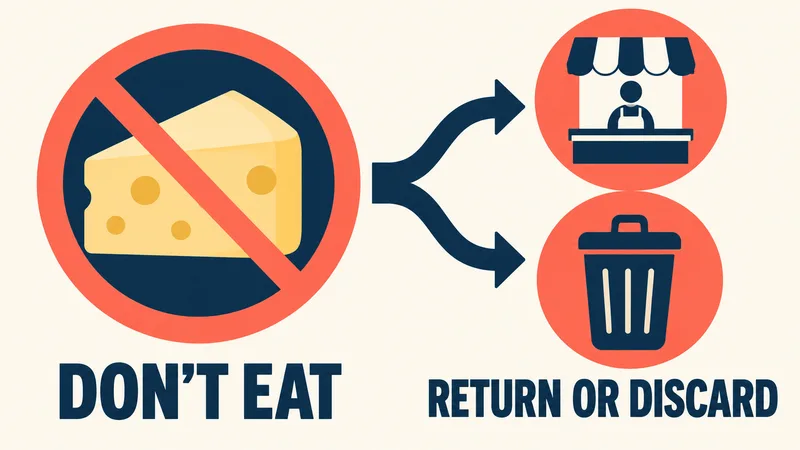
Do not eat or serve recalled Graziers raw milk cheese. The FDA's advice is that consumers who bought it may return it to the place of purchase for a refund, or throw it away. If a piece was refrigerated or frozen without its original packaging and you cannot tell whether it is part of the recall, throw it away rather than guess.
Clean and sanitize anything the cheese touched, including a drawer, a shelf, a knife or a container that held crumbled pieces.
The CDC lists symptoms that call for contacting a healthcare provider rather than waiting: diarrhea with a fever above 102 degrees Fahrenheit, diarrhea lasting more than two days without improving, bloody diarrhea, vomiting severe enough that liquids will not stay down, or signs of dehydration such as passing little urine, a dry mouth and throat, or dizziness on standing.
Consumers with questions can call Sierra Nevada Cheese Company at (530) 934-8662 from 8:30 a.m. to 5:00 p.m. Pacific Time on weekdays, or email [email protected]. Complaint reports can also go to an FDA consumer complaint coordinator or through MedWatch.
What is still not established
The source of contamination has not been identified, and the FDA says its investigation continues. The advisory records distribution to the Republic of Korea, so the product left the United States as well as moving through it. No recalled volume and no production or shipping date range have been published.
Sources & further reading
- Outbreak Investigation of E. coli O26:H11: Raw Milk Cheese (September 2026)U.S. Food and Drug Administration · accessed Oct 12, 2026
- Sierra Nevada Cheese Company Recalls Graziers Raw Milk Cheese Because of Possible Health RiskU.S. Food and Drug Administration (company announcement published as a public service) · accessed Oct 12, 2026
- E. coli Outbreak Linked to Raw Milk CheeseU.S. Centers for Disease Control and Prevention · accessed Oct 12, 2026
- Food Safety and Raw MilkU.S. Food and Drug Administration · accessed Oct 12, 2026
- Investigations of Foodborne Illness OutbreaksU.S. Food and Drug Administration · accessed Oct 12, 2026