FOMC Minutes Show a Unanimous September Rate Rise With Two Different Arguments
The September 2026 FOMC minutes, released on October 7, record a unanimous quarter-point increase to a target range of 3-3/4 to 4 percent and two different reasons for it: risk management for many participants and their own central forecasts for a number of others. Most participants assessed that another increase would likely be appropriate by year end, while saying decisions at future meetings would depend on incoming information.

A unanimous vote, two different arguments
The Federal Reserve released the minutes of its September 15-16, 2026 meeting on October 7. They record a Committee that raised its policy rate by a quarter point to a target range of 3-3/4 to 4 percent. Every participant supported the action, and the postmeeting statement was approved 12-0. The unanimous vote settled the decision. What the minutes add is the reasoning, which was not uniform.
What the minutes do record is disagreement about how much higher the path should go and what justifies it. Most participants assessed that another increase in the target range would likely be appropriate by year end, while emphasizing that decisions at future meetings would depend on incoming information and its implications for the outlook and the balance of risks. The next meeting is scheduled for October 27-28.
The operating details
The Board of Governors voted unanimously to raise the interest rate paid on reserve balances to 3.90 percent and approved a quarter-point increase in the primary credit rate to 4.0 percent, both effective September 17. The directive the Committee issued to the Open Market Desk keeps standing overnight repurchase agreement operations at a rate of 4.0 percent, and standing overnight reverse repurchase agreement operations at an offering rate of 3.75 percent with a per-counterparty limit of $160 billion per day.
The minutes also record that the Desk had paused reserve management purchases. The manager said the pace was not on a preset course and that the Desk would keep deciding each month, aiming to keep reserves within a range consistent with an ample supply.
Inflation at 3.8 percent
The staff told the Committee that total PCE inflation, measured over 12 months, edged up to 3.8 percent in August, while core inflation, which excludes consumer energy prices and many consumer food prices, held at 3.4 percent. Both were higher than a year earlier. The staff attributed this mostly to the effects of past tariff increases, higher energy and input costs stemming from geopolitical developments, and an increase in technology-related consumer goods prices associated with the AI buildout.
The Bureau of Economic Analysis had announced a methodology change for the end of September, and under the new approach the staff estimated that August inflation would have been 3.6 percent, with core at 3.2 percent. A few participants noted that software and portfolio management fees had made relatively large contributions to recent PCE readings and that those contributions would likely be reduced somewhat under the new method.
Participants said they had not seen sufficient progress on lowering inflation in recent months. Several pointed to price increases in core services excluding housing, and several more to the core goods category, where they said the effect of the AI buildout appeared to be growing as the effect of tariff increases faded. Some said that, according to various modeling approaches, underlying inflation appeared to be above the Committee's 2 percent objective and to have moved sideways in recent months. Participants generally expected inflation to remain elevated in the near term and then decline toward 2 percent over the medium term under appropriate monetary policy.
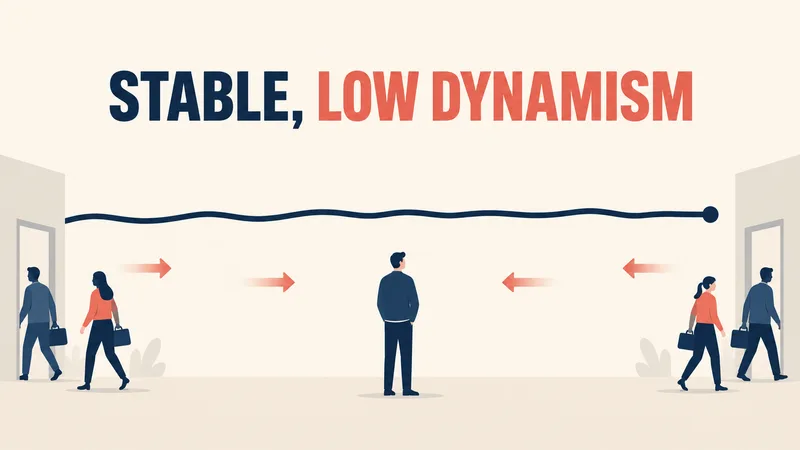
A stable labor market, with low dynamism
Participants judged that labor market conditions were stable and generally viewed the labor market as close to maximum employment. A majority assessed that it had strengthened a bit recently, pointing to developments such as employment gains modestly outpacing labor force growth. The unemployment rate moved down to 4.1 percent in July and August, 0.3 percentage point lower than its average in the second half of last year.
Other participants read the same data differently. Several noted that dynamism in the labor market was unusually low, as reflected by low rates of hiring and layoffs, a low job-finding rate and a persistently elevated long-term unemployment rate. Some commented that aggregate wage growth was moderate and consistent with inflation moving toward 2 percent, or that the labor market was not currently a source of inflationary pressures. The employment cost index for private-sector workers was up 3.3 percent over 12 months through June, and average hourly earnings were up 3.1 percent over the 12 months ending in August, both below their year-earlier levels. Participants generally expected labor market conditions to remain stable, with the risks to the labor market broadly balanced.
Risk management or the central forecast
The recorded difference over the rate path is about the reason for it rather than the direction. Many participants emphasized that a higher path for the target range would be prudent on risk-management grounds, providing insurance against inflation remaining persistently above target because of stronger-than-expected demand or further adverse supply shocks. A number of participants viewed a higher path as necessary based on their modal outlooks rather than on risk-management grounds.
A couple of participants remarked on having increased their estimate of the neutral federal funds rate, and therefore their view of the appropriate setting for the target range. Several participants stated that they viewed the current policy rate as not restrictive or only mildly restrictive. Some said a higher policy rate would diminish the risk of persistently elevated inflation unanchoring inflation expectations and becoming further entrenched.
Which risks the minutes record
Participants generally assessed inflation risk as skewed to the upside, and some remarked that those risks had become more skewed to the upside in recent months. Many assessed that the longer energy prices remained elevated, the greater the risk that cost increases in certain sectors could lead to broader price pressures. Some commented that the AI buildout could cause aggregate demand to outpace aggregate supply over the medium term. Several noted that the possibility of further tariff increases was also an upside risk to inflation.
Some participants raised a slower-moving concern: after more than five years of inflation above 2 percent, elevated inflation rates could begin to affect inflation expectations and wage- and price-setting decisions. Participants judged that market- and survey-based indicators of medium- and longer-term inflation expectations remained consistent with the Committee's 2 percent objective, though several noted that measures of short-term inflation expectations were elevated. Almost all participants assessed that, while inflation risks were tilted to the upside, risks to the labor market had diminished and were now broadly balanced.
What the minutes say about October 27-28
The staff outlook in the minutes is stronger on activity and the labor market than the July one, and higher on prices. Staff projected inflation would decline over the remainder of the year and step down over the next two years, reaching 2 percent in 2029, with the forecast somewhat higher for 2026 through 2028 than the one prepared for the July meeting. Growth was projected to outpace potential through 2028.
The October meeting is scheduled for October 27-28. The December meeting, which comes with a Summary of Economic Projections, is set for December 8-9. The minutes record no decision about either meeting.
The balance sheet discussion
A few participants said Treasury markets had been functioning smoothly but noted the importance of planning for market stress. They suggested strengthening the Federal Reserve's strategy, communications and tools for addressing market dysfunction while limiting its footprint in the Treasury market. The minutes do not record a decision on that.
Sources & further reading
- Minutes of the Federal Open Market Committee, September 15-16, 2026Board of Governors of the Federal Reserve System · accessed Oct 12, 2026
- Minutes of the Federal Open Market Committee, September 15-16, 2026Board of Governors of the Federal Reserve System · accessed Oct 12, 2026
- Federal Reserve issues FOMC statementBoard of Governors of the Federal Reserve System · accessed Oct 12, 2026
- Implementation Note issued September 16, 2026Board of Governors of the Federal Reserve System · accessed Oct 12, 2026
- FOMC meeting calendars, statements and minutes (2021-2027)Board of Governors of the Federal Reserve System · accessed Oct 12, 2026