Fed Finalizes Stress Test Rules: Two Shocks, Two-Year Averaging
The Federal Reserve finalized two rules on 30 September 2026: annual public input on stress test scenarios and models, two global market shocks with the larger loss used for trading-heavy banks, and stress capital buffers averaged over the two most recent tests from 2028. The Board estimates about a 50% cut in year-over-year volatility.

What the Fed finalized
The Federal Reserve has finalized two rules that change how its annual stress test works and how the capital requirements flowing from it are calculated. The Board says the changes should cut year-over-year volatility in those requirements by roughly half.
The rules were finalized on 30 September 2026 and published in the Federal Register on 2 October. They are described as largely similar to proposals from 2025.
The stress test is the exercise that decides whether large banks can keep lending through a severe recession. Its results feed the stress capital buffer, the extra capital a bank holds on top of its minimum requirements.
The first rule: transparency and scenarios
The first final rule covers how the test is designed and how much of that design is public.
It requires the Board to invite public input every year on the stress test scenarios and on any material model changes. That is a procedural change with a long reach, because the scenario determines the losses banks have to absorb on paper.
The rule also updates the framework guiding scenario design and adopts the models that will be used for the 2027 stress test. It makes several adjustments to the stress test calendar, which matters to banks planning capital actions around publication dates.
The global market shock component also changes. That component applies shocks to specific market factors and hits banks with large trading books. Under the final rule, those banks will be tested against two global market shock components each year, and the Board will use whichever produces the larger losses for each firm when calculating that firm's results.
That moves the test from a single shock to a worse-of-two approach for trading-heavy banks, which is where much of the year-to-year swing has historically come from.
The second rule: averaging two years
The second final rule changes the arithmetic of the buffer itself.
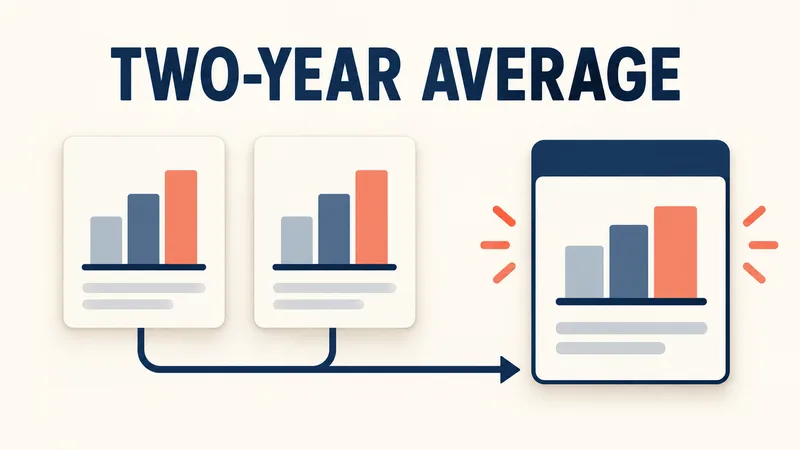
When calculating stress capital buffer requirements, the Board will average the results from the two most recent annual supervisory stress tests for firms subject to the test in both years.
Averaging starts in 2028. The Board gives a specific reason for the delay: it wants only models that have incorporated public input used in the calculation. Starting earlier would blend results from models adopted under the old process.
Averaging two years is the mechanism behind the volatility claim. If a single adverse scenario produces an unusually large loss estimate in one year, that year's effect is halved in the buffer calculation.
The proposal that is still open
Alongside the two final rules, the Board requested comment on a proposal to revise its noninterest income model, the part of the test that projects fee income banks earn from sources other than lending.
The stated aim is to better capture differences in banks' business models. Fee income is a large share of revenue at some firms and a small share at others, and a single projection model can penalize or flatter them for reasons unrelated to risk.
If adopted, the adjustments would replace the current model. Comments are due 60 days after publication in the Federal Register.
What the Board says the effect will be
The Board states that, together, the changes are likely to reduce year-over-year volatility in capital requirements by approximately 50 percent, and that they are not expected to materially affect aggregate capital requirements.
Those two claims fit together: averaging reduces swings without moving the level much, at least in the Board's own estimate.
Vice Chair for Supervision Michelle W. Bowman framed the changes as preserving the test's resilience while making it more transparent, granular and risk-sensitive. In the release she said the public will have greater assurance that the risks banks take are reflected appropriately in stress test losses and capital requirements.
Two governors also filed statements on the decision: the release links separate statements from Governor Barr and Governor Cook rather than presenting the reasoning as uniform.
What is not settled
The rules govern process and calculation. They do not change the scenarios themselves, which will be proposed and revised through the new annual comment process, and they do not change the capital framework outside the stress test.
The volatility figure is the Board's estimate rather than an outcome. Whether averaging and the two-shock approach produce the stated reduction depends on how future scenarios behave.
The 2028 start means the first averaged buffers will rest on stress tests run in 2027 and 2028, so the practical effect on any individual bank's capital planning arrives later than the rules themselves.
The compliance mechanics sit in the Federal Register notices and the Board memo published alongside the release. For anyone modelling a bank's capital path, those documents and the 2027 stress test page linked in the release are the working papers.
Sources & further reading
- Federal Reserve Board finalizes changes to enhance the transparency and public accountability of its stress test and reduce volatility in its stress test-related capital requirementsBoard of Governors of the Federal Reserve System · accessed Oct 12, 2026