DeepSeek V4.1 Flash: 1M Context, Vision and Half-Price Off-Peak Hours
DeepSeek's cheaper API tier, deepseek-flash, runs the DeepSeek-V4.1-Flash model with a one-million-token context, image support and a 2,500-request concurrency limit. Off-peak rates are half of peak rates, and peak hours are two UTC blocks on weekdays rather than local nights.
What the Flash tier is now
DeepSeek's current API lineup has two models, and the cheaper one is called deepseek-flash, served by the DeepSeek-V4.1-Flash model. It is not simply a smaller version of the flagship, because it offers two things the pro tier does not.
The first is vision. The documentation lists image support for the Flash model and marks it as not supported for deepseek-v4-pro.
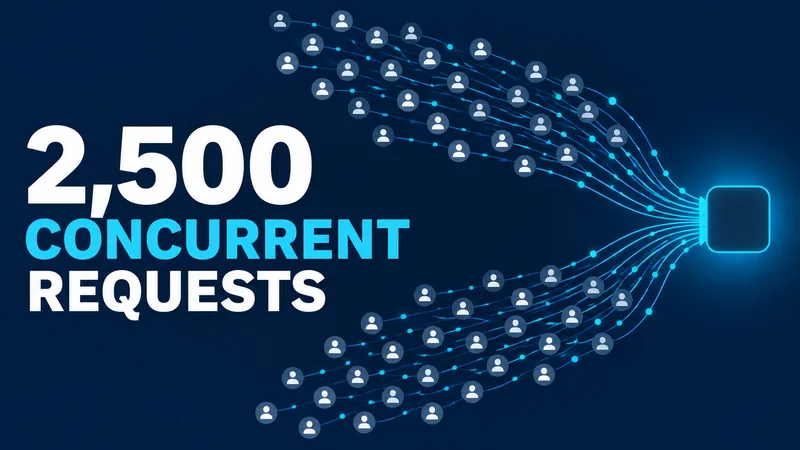
The second is a higher concurrency limit: 2,500 for Flash against 500 for v4-pro. For anyone running an agent that fires many requests at once, that difference shapes what is buildable.
Both models share the same base URLs. There is an OpenAI-format endpoint and an Anthropic-format endpoint, so existing tooling can point at DeepSeek without a rewrite.
The specifications that matter
The documented context length is one million tokens for both models, with a maximum output of 384K tokens.
Thinking mode supports both non-thinking and thinking variants, and thinking is the default. That matters for anyone who tested an earlier generation and assumed a fixed mode.
The feature list covers JSON output, tool calls, a Responses API, an Anthropic-compatible API, chat prefix completion in beta, and FIM completion in beta, with FIM restricted to non-thinking mode.
How the pricing is structured
Pricing is quoted per million tokens, and it has two axes: cached or uncached input, and peak or off-peak time.
For the Flash model, a cache hit on input costs $0.003 per million tokens off-peak and $0.006 at peak. A cache miss costs $0.15 off-peak and $0.30 at peak. Output costs $0.60 off-peak and $1.20 at peak.
The rule behind those pairs is simple: off-peak rates are half of peak rates.
What counts as peak is specific. Peak hours are 01:00 to 04:00 and 06:00 to 10:00 UTC, Monday through Friday, excluding Chinese public holidays. Every other hour is off-peak, including the whole weekend and the whole of any Chinese public holiday.
The cheapest windows are not simply "nights" in any single timezone. For a team in Europe or the Americas, much of the local working day falls outside the two peak blocks, and the weekend is entirely off-peak.
What the cached input price means in practice
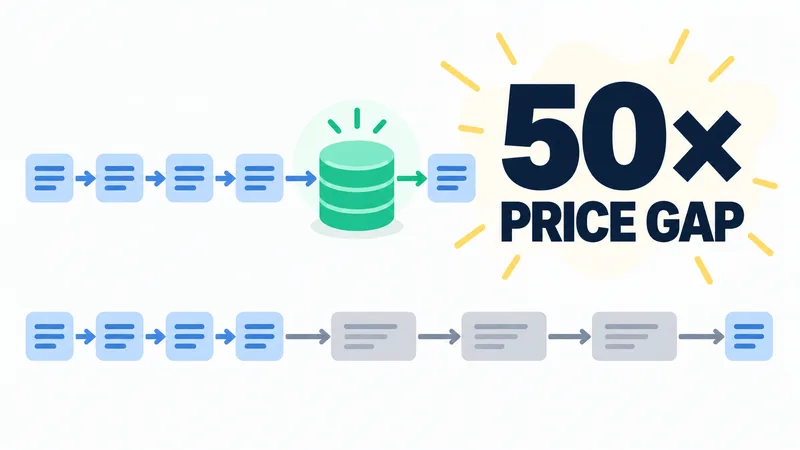
The gap between a cache hit and a cache miss is fifty times on the Flash model: $0.003 against $0.15 off-peak.
That ratio is why the documentation gives caching its own section. An agent with a fixed system prompt and tool definitions is one example of a workload that repeatedly sends the same long prefix.
The rate card promises no particular cache hit rate. That depends on how an application reuses context, which is a design choice rather than a pricing fact.
How the two tiers compare on paper
The pro tier costs more on every line, but not by a uniform factor. Cached input is $0.022 against $0.003 off-peak, about seven times higher. Uncached input is $0.66 against $0.15, about four times. Output is $1.98 against $0.60, about three times.
In exchange it carries the name DeepSeek-V4-Pro-0813, a lower concurrency ceiling, and no image support. The documented trade is therefore not only price against capability. It is price and images against a pro-labelled model with stricter concurrency.
The parts the page does not answer
The page does not publish a cache-hit rate, a latency figure or a throughput table, and it does not benchmark either model against alternatives. It also does not explain what makes the pro model better beyond its name and the features it lacks, which is unusual to see stated so plainly in a rate card.
It carries a standing caveat as well: prices may change, and the documentation recommends checking the page for current rates rather than relying on a saved copy. Billing multiplies tokens by price and draws down granted balance before topped-up balance.
The legacy model names are handled explicitly. Requests using deepseek-v4-flash and deepseek-v4-flash-vision-exp are still accepted, but the retired models behind those names are served by DeepSeek-V4.1-Flash and billed at the Flash price, so an integration pinned to an old name keeps working and gets the new model.
Why this tier is the one to watch
A rate card with a one-million-token context, vision, a 2,500-request concurrency limit and an off-peak discount tied to UTC windows is aimed at production workloads rather than experiments.
The practical questions for a team evaluating it are specific: whether their traffic falls inside the peak blocks, whether their prompts can be structured for cache hits, and whether they need images, which only the cheaper tier offers. Those three answers decide more about the bill than any headline price per token.
Sources & further reading
- Models & PricingDeepSeek API Docs · accessed Oct 12, 2026