Claude Haiku 5.5: What $0.10 Per Million Input Tokens Buys, and When to Pick a Bigger Model
Anthropic's Claude Haiku 5.5 puts a 1M-token model at $0.10 per million input tokens and $0.50 per million output tokens for prompts up to 100,000 tokens, with five times those rates above that line. Here is what the tier buys, which jobs it fits and when Sonnet 5.5 or Opus 5.5 remains the better choice.

What Anthropic released on October 7
On Anthropic's Claude API, Claude Haiku 5.5 costs $0.10 per million input tokens and $0.50 per million output tokens for prompts up to 100,000 tokens, and five times those rates above that line. Anthropic released it on October 7, 2026 and calls it the cheapest, fastest and most capable small model it has shipped. Anthropic lists high-volume, cost-sensitive work as its target: summaries, compaction of long conversations, database queries and classification requests. The API model ID is claude-haiku-5-5, and the model is live on Anthropic's own platform and the three large cloud marketplaces.
The same announcement halved the price of Sonnet 5.5 cache reads and introduced a monthly API credit for Max and Team subscribers. Haiku 5.5 is the piece aimed at builders who pay per token.
The price tier, in the numbers that decide the bill
Pricing comes in two bands, and the gap is wide. A request whose prompt is up to 100,000 tokens pays $0.10 per million input tokens and $0.50 per million output tokens. Above 100,000 tokens the same request pays $0.50 and $2.50. Cache reads are $0.01 per million below the threshold and $0.05 above it, and the Batch API takes 50 percent off input and output.
Haiku 4.5, the model it replaces, charged $1 per million input tokens and $5 per million output tokens at any prompt length. Anthropic says Haiku 5.5 costs around 75 percent less to run on average. These are first-party rates. Amazon Bedrock and Google Cloud are partner-operated platforms that price independently, so the same model can cost more there.
Two details change how that lands in practice. The first is the tokenizer. Haiku 5.5 uses the one introduced with Claude 4.7, which produces about 30 percent more tokens for the same text than Haiku 4.5 did, so a cut per token is not the same as a cut per page of input. The second is the threshold. Anthropic says the value is strongest on prompts up to 100,000 tokens, and its own figure for the previous Haiku model is that around 90 percent of requests stayed under that line. That threshold counts every input token in the request, cache reads and cache writes included, and each request is priced on its own. A long conversation that crosses the line pays the higher band even when most of the prompt is a cache hit.
Haiku 5.5 is also the exception in Anthropic's long-context pricing. Other recent Claude models include their full 1M token context window at standard rates; this one keeps the 1M window and changes rate above 100,000 tokens.
What the published benchmarks show, and what they do not
Anthropic's launch table puts Haiku 5.5 next to Haiku 4.5, GPT-6 Luna and Sonnet 5.5 for reference. On GDPval-AA v2.1 the new model scores 1,620, against 735 for Haiku 4.5 and 1,840 for Sonnet 5.5. On the offline subset of OSWorld 2.1 it reaches 72.4 percent, against 15.7 percent and 83.9 percent. Terminal-Bench 4.0 gives it 39.2 percent, against 0.0 percent for Haiku 4.5 and 70.6 percent for Sonnet 5.5.
Anthropic ran these evaluations and published the results with the launch, and the linked system card describes the method. The numbers are the vendor's own, not independent verification. The company plots accuracy against cost rather than printing one figure per test, because the effort setting moves the scores. Whether a Claude model holds its performance after release is a separate question, and an earlier explainer covers a project built to test that for Opus 5.5.
The jobs a fast small model is meant to take
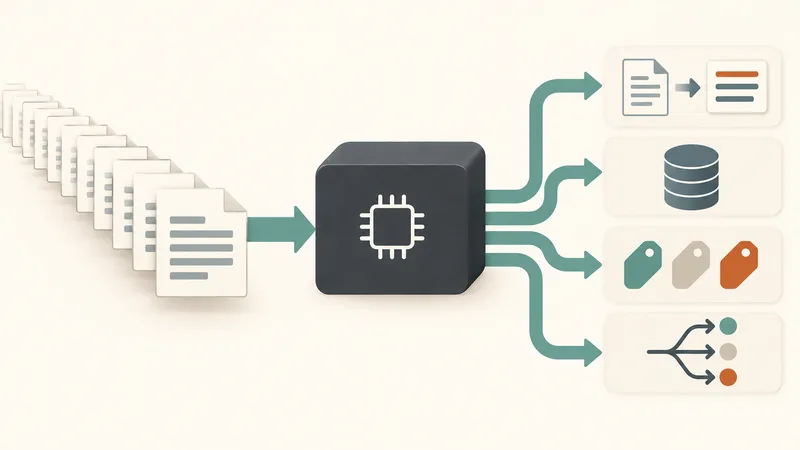
Anthropic calls Haiku 5.5 its fastest model to date and points it at speed-sensitive work such as live customer support and browser use. It also names classification, routing and extraction, the calls that repeat thousands of times a day, and subagent work alongside Opus 5.5 and Sonnet 5.5.
This is the first Haiku-class model with the adjustable effort setting. A labelling call can run at low effort; a harder one can be raised. Adaptive thinking is on by default and the default effort is medium.
The launch post carries customer statements too. Asana said its evaluation of Haiku 5.5 for its AI Teammates product showed more than a 30 percent reduction in latency for task completions and up to 2.5 times faster inference per agent turn. Anthropic lists HubSpot, AlphaSense, Box, Rogo and Cognition as early testers. Those are customer reports gathered by the vendor, and they describe production use rather than a public benchmark.
When a bigger Claude is the better buy
The same table shows where the small model stops. Sonnet 5.5 scores 70.6 percent on Terminal-Bench 4.0 to Haiku 5.5's 39.2, 83.9 percent on the offline subset of OSWorld 2.1 to 72.4, and 56.9 percent on Humanity's Last Exam against 45.9 without tools. Anthropic describes Haiku 5.5 as a companion to Opus 5.5 and Sonnet 5.5 rather than a replacement for them.
Multi-step agentic coding and long-horizon knowledge work are where the larger models earn their price, along with any task where a wrong answer costs more than the tokens. Two boundaries are easier to miss. A workload whose prompts regularly exceed 100,000 tokens pays the higher band on every such request. And the cybersecurity safeguards block penetration testing and similar attacker-style techniques, while allowing a wider range of defensive work than the safeguards on Sonnet 5.5 permit.
Availability and the support window
Haiku 5.5 is live on the Claude API, Amazon Bedrock, Google Cloud, Microsoft Foundry and Claude Platform on AWS. Model IDs differ by platform: claude-haiku-5-5 on the Claude API, anthropic.claude-haiku-5-5 on Bedrock, and claude-haiku-5-5 on the other three. The reliable knowledge cutoff is June 2026, the same as Anthropic's other current models, and the company says it will not retire the model before October 7, 2027. A migration guide covers code changes for teams moving from Haiku 4.5.
What is still open
Anthropic ran every comparison in its launch table, including the gaps against Sonnet 5.5 and GPT-6 Luna, and published no outside evaluation with it.
Cost per task is the open question. Adaptive thinking is on by default, output tokens are billed at the output rate, and the same text counts as more tokens than it did on Haiku 4.5, so the bill depends on how much the model thinks on each call.
The launch drew a large thread on Hacker News. A submission from October 7 reached 1,046 points and 488 comments by October 12, and much of it compared Haiku 5.5's price with smaller models from other vendors. Those counts are the site's own, from one English-language technology community, and the comments are not evidence about what the model can do.
For a team weighing the switch, two numbers matter more than the headline rate: the share of requests that stay under 100,000 tokens, and the output tokens each call really produces. Those decide whether the 75 percent figure applies to a real bill.
Sources & further reading
- Introducing Claude Haiku 5.5Anthropic · accessed Oct 12, 2026
- Claude Haiku 5.5 - Claude Platform DocsAnthropic · accessed Oct 12, 2026
- Pricing - Claude Platform DocsAnthropic · accessed Oct 12, 2026
- Hacker News story search snapshot for Claude Haiku 5.5Hacker News (Algolia API) · accessed Oct 12, 2026
- Hacker News item 49996437 API snapshotHacker News · accessed Oct 12, 2026