Apex Legends Broke Up Its Top Ranked Squads and the Matches Did Not Get Fairer
Respawn published the results of two Ranked matchmaking experiments on September 30, 2026, and neither becomes permanent. A one-tier limit on premade squads changed little outside Diamond and Platinum, and locking Diamond, Master and Predator players to solo queue removed the stacks without making matches more even.
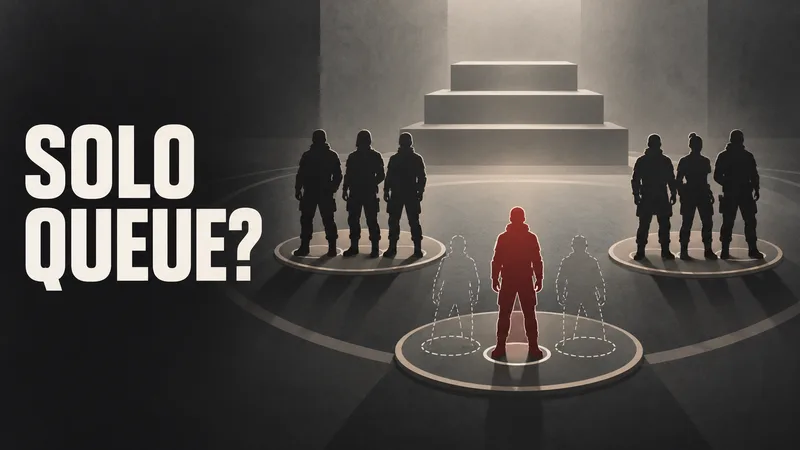
Apex Legends will not keep either of the ranked matchmaking changes it tested in the Overclocked season. Both experiments targeted premade squads, and Respawn published the results on September 30, 2026: the one-tier squad restriction changed little for a narrow group of players, and locking Diamond, Master and Predator players to solo queue did not deliver a better experience.
What the two experiments changed
One test restricted premades to players within one rank tier instead of two, to stop wide-band squads from pulling lower-tier players into higher-tier lobbies. The other locked Diamond, Master and Predator players to solo queue, removing premades entirely at the top of the ladder. For both, Respawn measured whether match quality improved and how the change felt to play. The studio describes Ranked as a trust problem: the system has to represent a player's skill accurately, show honestly who they are up against, and put them in matches where climbing is possible.
Why premade squads were the target
Across Ranked, a squad with a premade duo plus a solo fill wins 19 percent more often than a squad of three solos, and a full premade trio wins 17 percent more often. The behaviour concentrates at the top: 85 percent of Masters squads are premade three-stacks. Both tests went after that advantage.

One tier instead of two moved one number
The tier restriction produced a narrow effect. Diamond players faced about 8 percent fewer Diamond opponents and roughly 8 percent more Platinum opponents, while Platinum players saw more Diamonds in their lobbies. Outside those two tiers nothing meaningful changed. Respawn decided that a small improvement for a narrow slice of players was not worth the constraint on everyone else who was used to playing with friends within two rank tiers, so the one-tier restriction is not being made permanent.
Solo queue removed the stacks and changed little else
The second test worked mechanically. Premade three-stacks at the top of the ladder went away, but the experience did not improve. If removing premades made matches more even, the gap between the strongest squads in a lobby and everyone else should have shrunk, and it barely moved. In Diamond, match result distributions stayed roughly where they were. In Masters there was a small dip in the top squads' win rate, but the win-rate gap between the top 10 and bottom 10 teams held at 9 percent. The best squad in the lobby still wins whether or not it queued together.
Why more players saw Predators, not fewer
Respawn calls this the most useful thing it learned, and it was the result the studio did not expect. To build a Ranked squad, the matchmaker pulls 60 available players of similar RP into a lobby, sorts them by RP and splits the list into thirds. Each squad then gets one player from the top third, one from the middle and one from the bottom. When Masters and above lost the ability to squad up, most of those players did not leave the lobby. They were spread one per squad instead of clustering into a few, so more squads in more matches contained a top-tier player, and a Diamond player met a Master or Predator more often than before. The pre-match skill display made it look worse than it was, because a squad with one Masters player and a squad with three Predators show up identically. More solo high-tier players meant more red on screen before the match started. Respawn says it will keep iterating on that display.
The result the studio says it cannot accept
Return rate measures how many players came back to Apex during the test after playing in the days right before it. The weakest numbers were in Diamond and above cohorts who had been playing in duos and trios. Respawn describes those players as some of the most engaged it has rather than casual players drifting off, and their Ranked play fell off during the window. The studio's reasoning is that Ranked matchmaking improves when more players at every skill level are in the queue, because more players means tighter bands, shorter waits and closer matches for everybody. A change that pushes people out of Ranked worsens the problem the tests were meant to fix, which is the outcome Respawn says it cannot accept.
What comes next instead
Neither experiment becomes permanent. Solo queue experiments are not dead, but this version was too broad. What Respawn is carrying forward is the goal without the blunt instrument: reduce how often players run into fully coordinated top-tier squads without taking away their ability to play with friends. Its teams are preparing further tests and will share details closer to implementation. The biggest changes coming out of these results land in Ranked in Seasons 31 and 32, and the studio says it will share them in October.
The other integrity change in the same week
Matchmaking was not the only competitive integrity work in the window. Apex Legends moved its PC anti-cheat from Easy Anti-Cheat to EA Javelin Anticheat, effective September 29, 2026. Respawn said the switch gives its anti-cheat teams greater visibility into emerging threats and more flexibility to build and improve detections, that players are migrated automatically after a game update, and that Apex does not require the secure boot step some other EA titles ask for. On October 9 the studio published an anti-cheat update listing fixes for several weapon exploits, including one that allowed an entire magazine to be fired in a single shot and another that let the Sentinel and C.A.R. SMG fire and reload faster than intended.
What the post does not give you
There are no return-rate figures, only the direction of the change, and no breakdown of which ranks lost the most players. The size of the Masters dip is described as small without a number. The 19 percent, 17 percent and 85 percent baselines are stated without a sample size, a mode split or a season range. No dates are given for the Season 31 and 32 changes beyond October, and there is no commitment that the pre-match skill display will be changed rather than iterated on. Whether the one-tier restriction could return in another form is not addressed either.
Sources & further reading
- Breaking Down Matchmaking Test ResultsElectronic Arts / Respawn Entertainment (official Apex Legends news) · accessed Oct 12, 2026
- Apex Legends: Matchmaking Test Results - 09/30/2026Respawn Entertainment (official Steam Community announcement, read through Valve's ISteamNews feed for app 1172470) · accessed Oct 12, 2026
- EA Javelin Anticheat is Coming to Apex LegendsRespawn Entertainment (official Steam Community announcement, read through Valve's ISteamNews feed for app 1172470) · accessed Oct 12, 2026
- An Update from the Anti Cheat Team - 10/09/2026Respawn Entertainment (official Steam Community announcement, read through Valve's ISteamNews feed for app 1172470) · accessed Oct 12, 2026